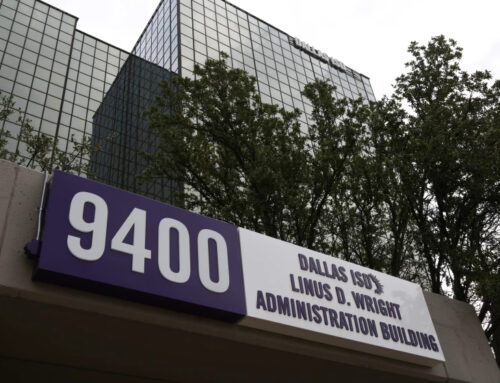
 I attended Woodrow Wilson High School’s SBDM (Site Based Decision Management) committee meeting Tuesday, and principal Ruth Vail provided a brief update about what the $64 million budget error at DISD means to Woodrow.
Vail said the initial directive to Woodrow — and to most other DISD schools, presumably — was to prepare a plan to eliminate 10 percent ($700,000) of the school’s budget, which is usually about 90 percent labor. Vail said this would have led to elimination of 12-14 positions at the school. But a further directive from DISD instead said to consider that plan but wait to do anything with it until DISD administration had a chance to look for some of the savings elsewhere.
The only sort-of good news about the timing of the budget shorfall discovery is that it very nearly coincides with a process called "leveling" that occurs annually in virtually all DISD schools a few weeks after the school year begins. Leveling involves assessing how each school’s actual enrollment matches its projected enrollment (Woodrow anticipated about 1,300 students but wound up with 1,423); schools with more attendance than expected typically receive an additional allocation of teachers and resources, usually at the expense of schools where enrollment was lower than expected.
The leveling process makes sense — the school district is simply matching available resources (a virtual zero-sum game) with education requirements in each school. But it’s disruptive to teachers who are re-assigned to other schools and to students who can be shuffled from a too-small class to one with a different teacher that is more full (if a 4th grade drops from four teachers to three teachers, for example, due to lower-than-anticipated enrollment).
Like I said, this leveling process was due to happen in DISD schools shortly anyway; the re-budgeting process looks as if it will dovetail with the leveling, at least combining what could have been two disruptions into one.