Far East Dallas neighbor and former Uplift White Rock Hills Principal Loren Colman always wanted to create her own school.
So she did — The Museum School of East Dallas.
The public charter school received approval from the State Board of Education and is expected to start up next fall. The Museum School of East Dallas will provide K-8 education for children in the 75228 ZIP code. Colman wants to find partnerships to include prekindergarten in the future as well. The location of the school is still unknown at the time of publication as the school leaders look for potential locations. Colman is also wanting the school to stay as small as possible.
The Museum School of East Dallas includes an extended day structure, operating from 8 a.m. to 5 p.m., to accommodate working parents as well provide enrichment activities and special needs intervention services to children in the afternoon. The core curriculum will be taught in the morning when students are best able to learn. Another idea for the schedule is merging lunch and recess together so that kids have time to eat instead of being rushed.
Colman’s idea to start a school has been in the works for two years as a grassroots movement, and she was able to get involved with “Build. Excel. Sustain.,” a national nonprofit that empowers local leaders to start charter schools. Before it was even named, she would wear a shirt at tabling events that read, “Want to start a school together?” And families became interested. Colman recruited parents and locals to serve on a design team that collected community input, and they set up pilot programs in the form of children’s camps.
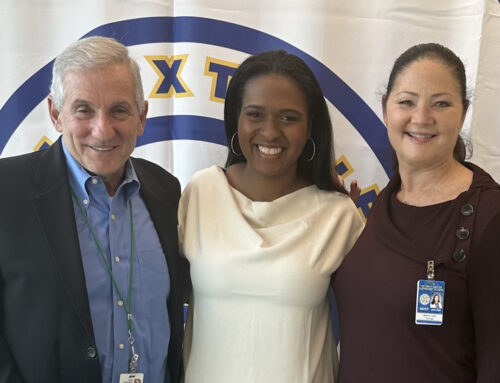
Colman and board member Carrie Sneed, who has worked in special education, talked with us about their vision for the new school.
What is a museum school?
LC: There’s a National Association of Museum Schools. There are about 50 nationwide, and so the three pillars of a museum school are immersive learning, documented student reflection and exhibition. If you think of project based learning, it is that and elevated into the community, so really using the community as assets to support and enhance the curriculum. We’re not necessarily writing our own curriculum. We’re using the state curriculum. Let’s say we’re learning about the 1950s. Oh, well, the local theater has a play going on that takes place during that time, so we coordinate with them, “Hey, can our kids be your dramaturgs for this play?” So then the kids, maybe they go once every other week, and somebody from the theater comes. It really brings purpose to the learning. We’re not just learning about the 1950s to learn about the 1950s. This is significant if you were a dramaturg, and so then it also really plants these seeds early on, too, of exposure to careers. One of the new terms is what we previously thought of as soft skills. It’s now thought of as durable skills. So getting kids a chance to really try that on while they’re doing the learning.
CS: A lot of immersive learning and project learning, traditionally, has been for older students. We’re starting in kindergarten, and scaling it as such, but they’re getting that exposure at a really early age.
How would the 8 a.m. to 5 p.m. schedule work?
LC: A lot of times when people hear that, they think that that one teacher is teaching 8 a.m. to 5 p.m., and that’s not the case. They’re teaching straight through in the morning, then they have planning in the afternoon. There might be some days where they’re tutoring during that time, but they’re not teaching 8 a.m. to 5 p.m. And we’re leveraging these community partners. Let’s take LaBori Boxing. It’s a nonprofit boxing gym in East Dallas. They come in, and they do boxing every day. Kids normally get P.E. once, maybe twice a week. Our kids are getting it every day. They’re also getting this access to somebody who hasn’t been teaching boxing all day. They’re coming in fresh, bringing in this expertise for a few hours. We’re leveraging community assets because especially in Dallas, especially in East Dallas, there’s so much rich culture. There’s also Lake Highlands School of Music. We could hire a music teacher, or we could leverage this really incredible music program and bring them in for a few hours.
CS: Art shouldn’t be an extra. Art is part of a curriculum. It’s part of a child’s development, that exposure and experience with art. Same with music, same with language, physical activity. These are all necessary aspects of education. They’re not extra. So the idea that we have set, these need to be incorporated. They are as important as math. So how are we going to incorporate it in that daily school schedule? And that’s where the extended day came in because is it good for kids? Then let’s figure out how to do it. We can’t sacrifice what students need and what is really important without thinking outside the box. We can’t go, ‘Well, we only have this time.’ That’s the beauty of the charter school.
Since this is a public charter school, there is no tuition being charged. How will the school be funded?
LC: It’s state funded. There is a gap in charter school funding in terms of we don’t have access to the local taxes for transportation and facilities. We don’t have seed startup funding. We can have it in our budget once we have kids. Right now, we are fundraising, applying for a plethora of grants that are specific to capital funding, seed funding, to close the gap on our facility, and then transportation, and then even teacher pay.
Why start a school? Why is another charter school needed?
LC: I watched my mom persevere through hardships, raising kids as a working single mom, and I think that instilled in me early on this desire to see potential in others. That looked like volunteering with special needs kids, and then I ended up doing that all through college, and that was my major. I just had this heart to see others who maybe had some odds stacked against them and say, ‘Even though there’s odds here, let’s keep going. Anything is possible.’
I had taught in East Dallas and been a principal in East Dallas, and I had also been a principal in West Dallas, and I was able to see a difference. There just were resources that I could get in West Dallas that I couldn’t get in East Dallas. And there just wasn’t a recognition of a need. I think there’s this illusion of wealth. People think Lakewood, M. Streets, White Rock Lake, and then they skip to Fair Park. And there’s this whole other ZIP Code in between, 75228. When I became principal of Uplift White Rock Hills, I connected with Vikki Martin from Ferguson Road Initiative and was sharing with her my heart, and she was able to put words to a lot of that. She’s like, ‘This is forgotten far East Dallas.’ We are a medical desert, food desert, childcare desert, recreation desert.
It was really my worlds colliding as an educator and as a parent and having conversations with other parents at daycare. … Especially after COVID, you had a lot of teachers running away, where I found myself running towards education saying, ‘We can do something.’ It became, ‘What if we start a school?’
(This provides) a new opportunity for students and families who might not meet the traditional mold, just really believing that a smaller, high quality option can and should be accessible for all students, no matter where you come from.
This interview has been edited for clarity and brevity.