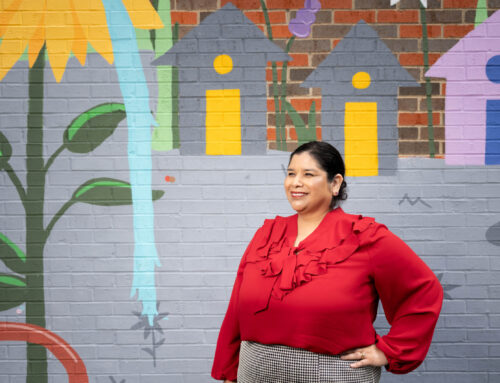
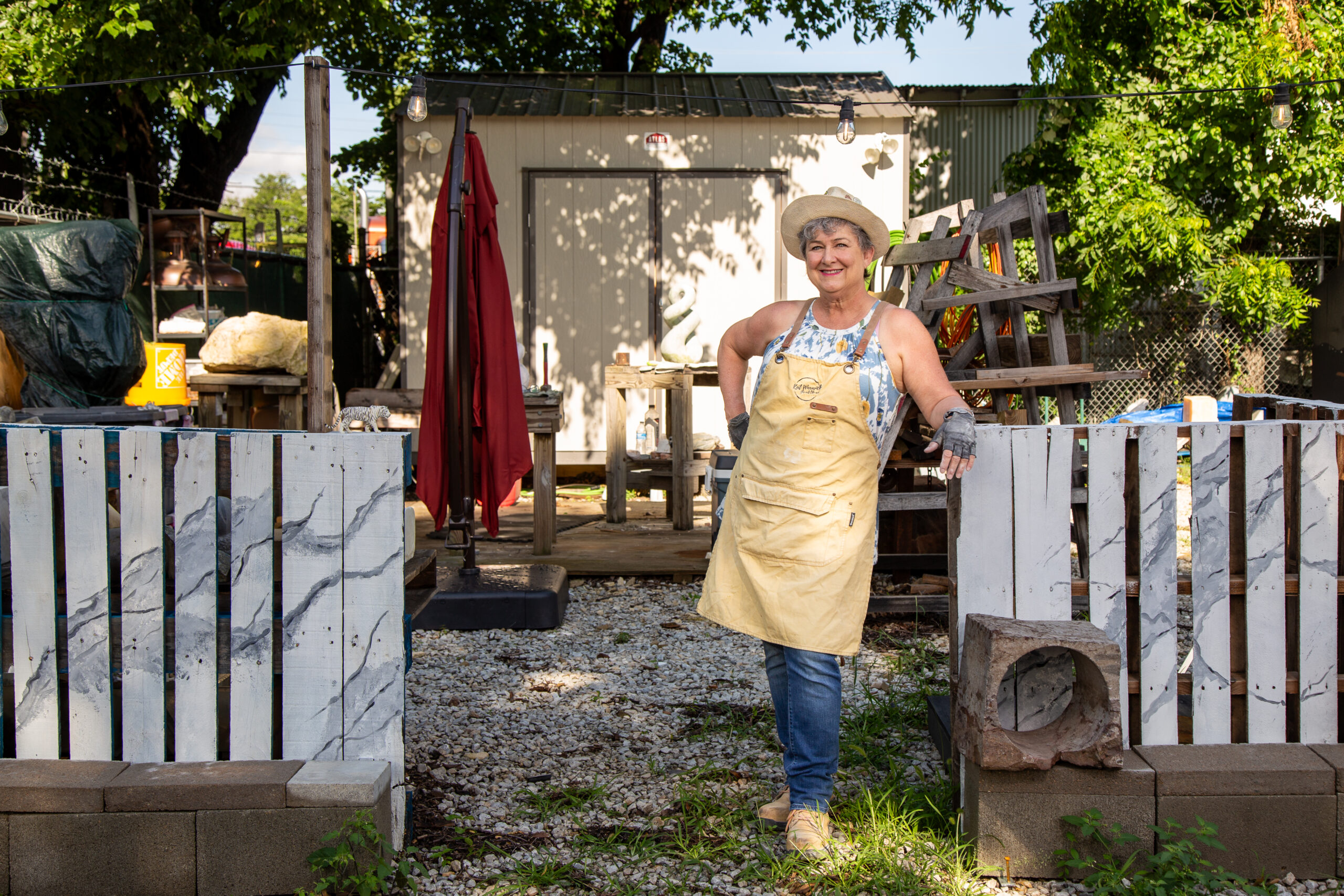
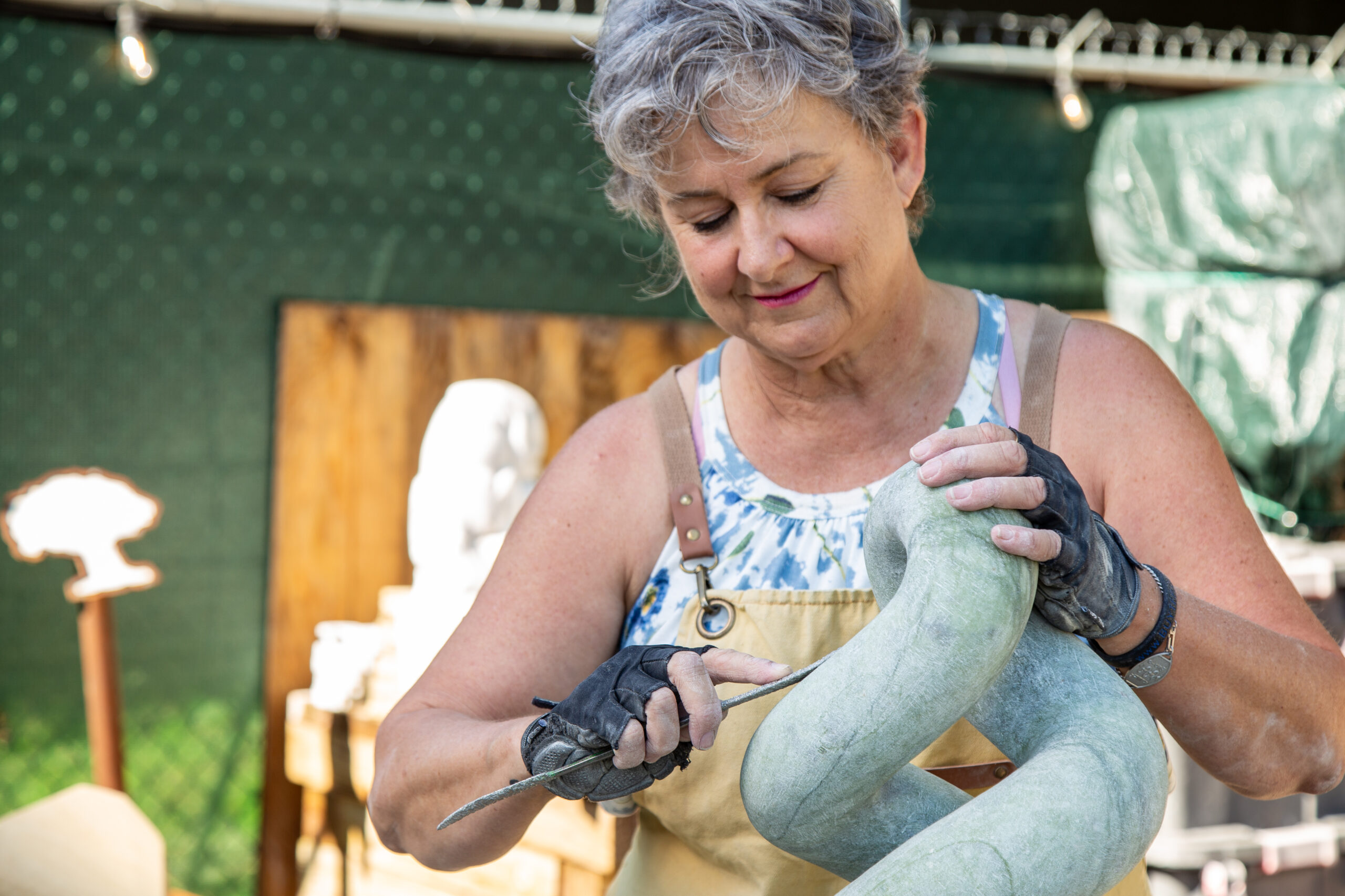
Sculptor Kat Warwick doesn’t always know what a block of stone will become until it tells her.
Photography by Yuvie Styles
Photography by Yuvie Styles
Photography by Yuvie Styles
The longtime East Dallas neighbor explains her two approaches — either there’s a plan that is carried out, or she waits until the idea reveals itself. The latter has inspired her most meaningful work.
Warwick once tried to carve a stone into an octopus, but “it was not going to have any part of that,” she says. She tried to make it into a heart, but the stone refused again. She let the stone be before coming back to carve a female torso, and the stone accepted its identity.
For the record, Warwick knows that listening to an inanimate object sounds “woo-woo and far-fetched and kind of just crazy,” but she knows other stone carvers who operate like this.
“There is a partnership between you and the stone if you’ll listen,” she says.
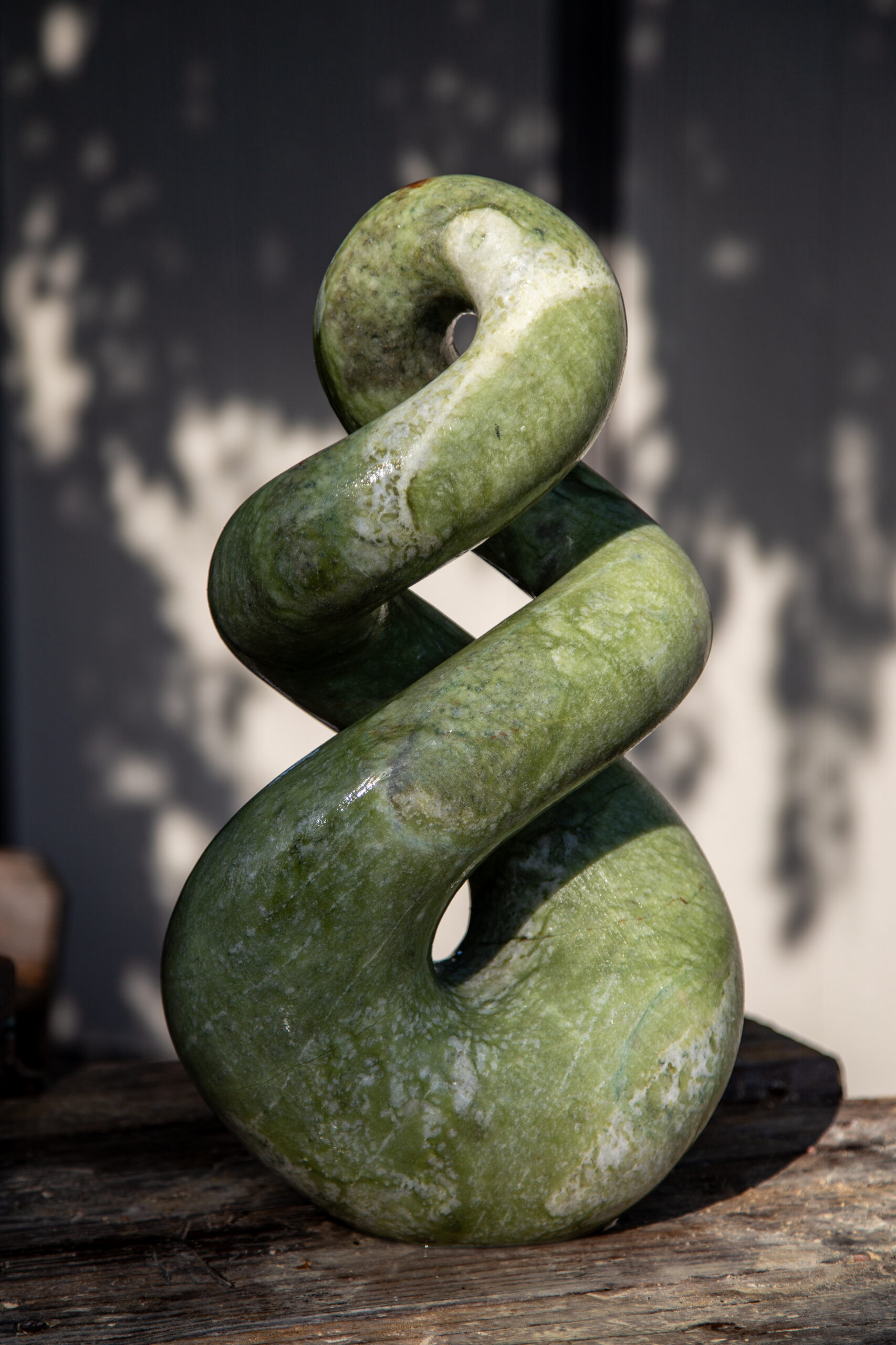
Warwick recalled another project where she was in the process of carving a green marble stone into an abstract shape. The stone, named “Unencumbered,” demanded that she stop carving in a certain spot. “Leave my scars” was the message Warwick received. What she ended up with is a sculpture that is polished on one side and bare on the other — the manicured side of ourselves that we as people show to the world versus the rougher areas we hide.
She later realized that the piece was her own self-portrait.
“As I worked on that sculpture, I realized ‘unencumbered’ means we should be unencumbered by our scars,” she says. “We shouldn’t be afraid to show our scars to the public. It’s part of who we are, so don’t hide them. Don’t cover them up. Own them. Walk proudly through life with both your good side and your scarred side.”
Warwick says she’s been artistically inclined since her childhood. She took art classes in college, but her degree was in advertising, the latter of which didn’t suit her and wasn’t pursued as a career path. Warwick didn’t get an art job, either, though she volunteered her services for a Boy Scout troop. She took work with a label printing company and then, (ironically) an architectural stone company, both of which included roles in sales, project management and customer service.
You may already be familiar with Warwick — she made headlines for carving stones in her front yard in the COVID-19 years. She did this after seeing families walking to the park and wanted to give them something interesting to see during their walk but ended up doing more than that. She taught stone carving elements to children from a safe distance as well as related math skills, like how to calculate a stone’s weight. Eventually, when social distancing mandates were lessened, she led some clay classes and pumpkin carving for Halloween.
This wasn’t Warwick’s entry point into teaching. She has always passed on her know-how to other people.
“It seems a sin to learn a thing and then not share that knowledge with others,” she says.
Photography by Yuvie Styles
Professionally, Warwick started teaching another art form first — dance. She learned to swing dance in the late ’90s. Warwick and her husband had volunteered to teach classes, and after losing her corporate day job in 2008, she was able to make a living as a dance instructor.
“So here I am teaching dance at night, having my daytimes available, and I thought, well, I really miss art, and I really want to be sculpting,” Warwick says, noting that she was in her early 50s at the time. “It’s like, if I’m ever going to do it, I need to start now. I need to build up the strength; I need to build up the knowledge because it’s kind of late in the game to be starting a career.”
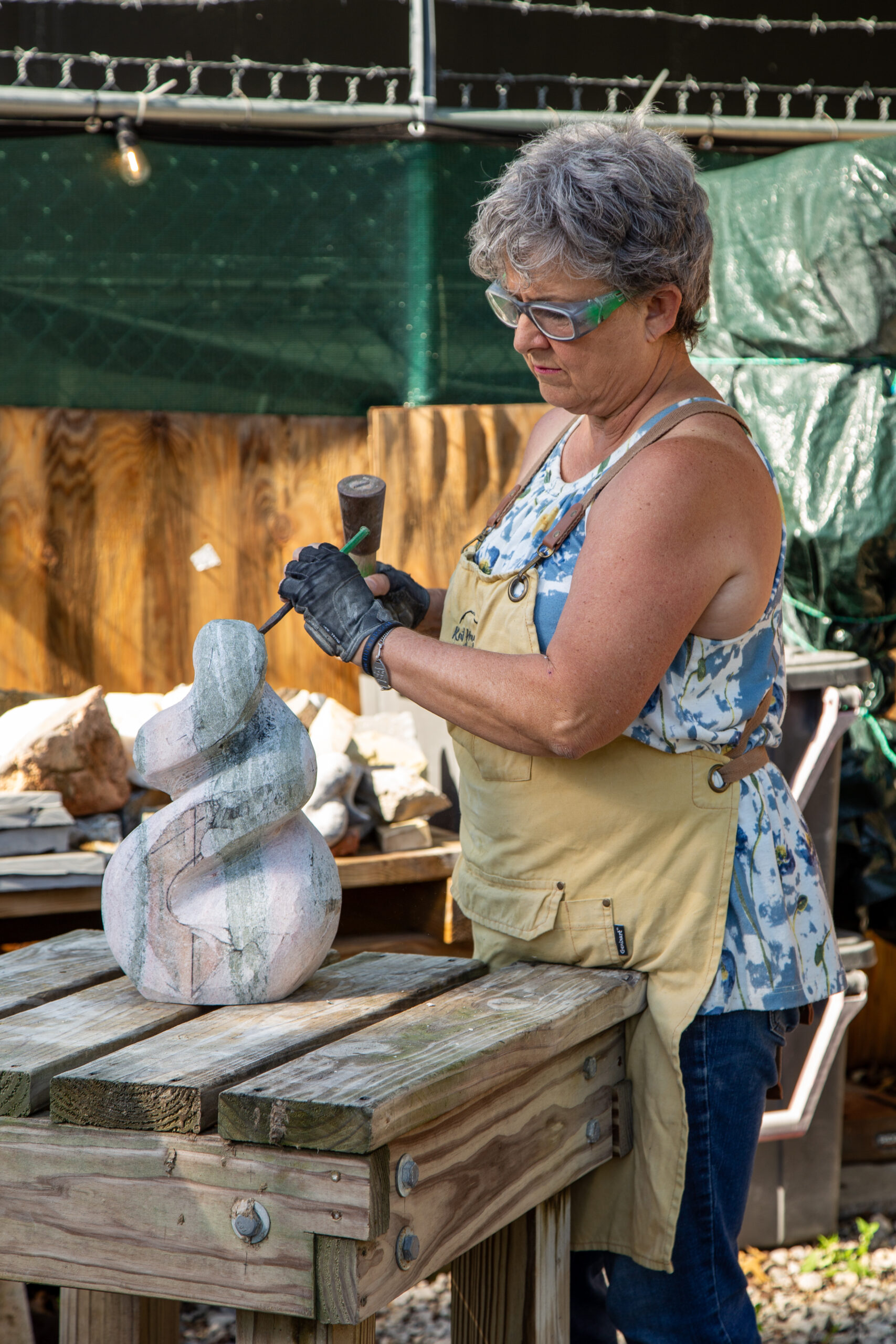
She sought out the Creative Arts Center of Dallas, a nonprofit near Ferguson Road and I-30, and took clay sculpting classes in the 2010s before switching to stone sculpture. When this happened, Warwick “left clay behind in the dust,” she says.
Photography by Yuvie Styles
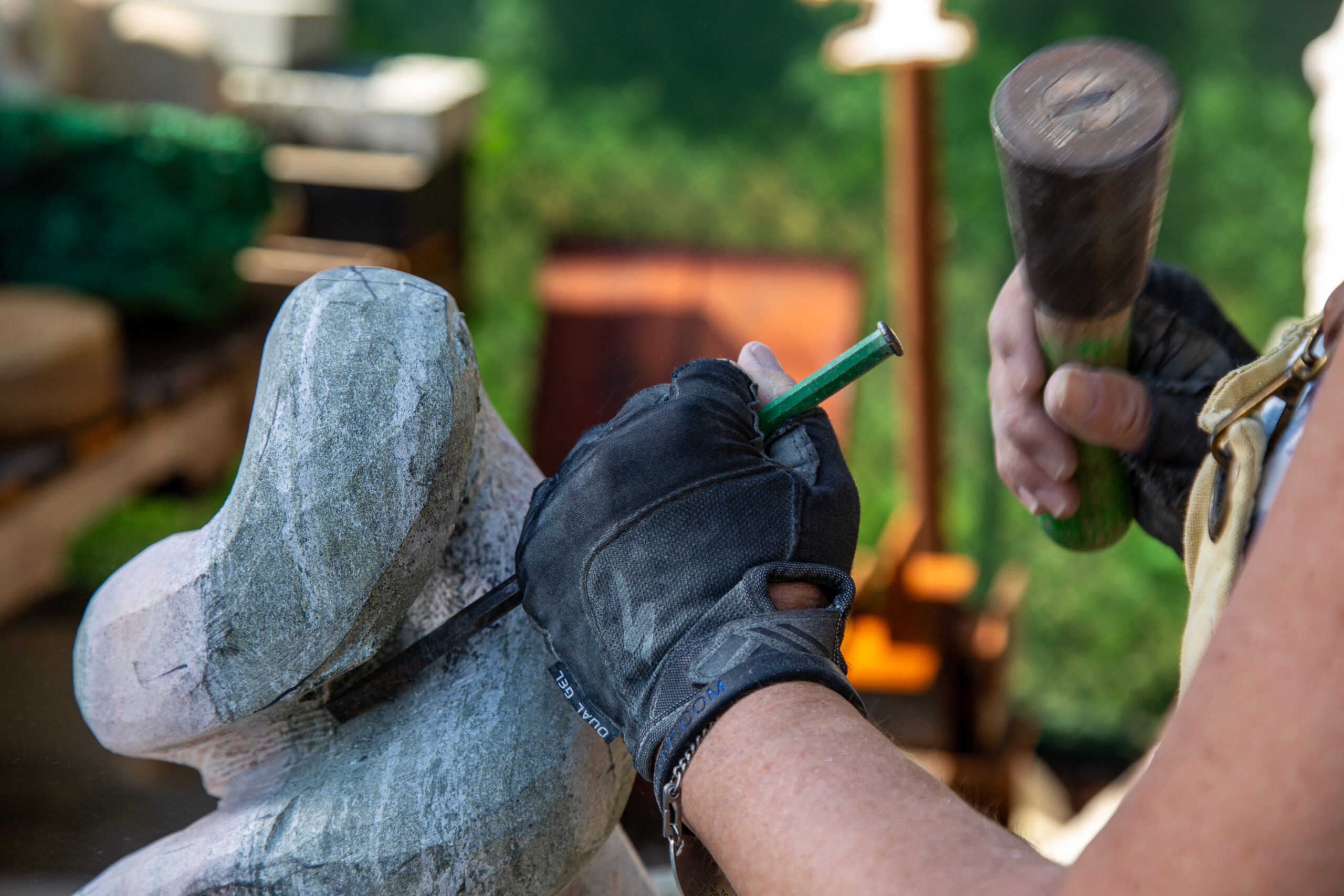
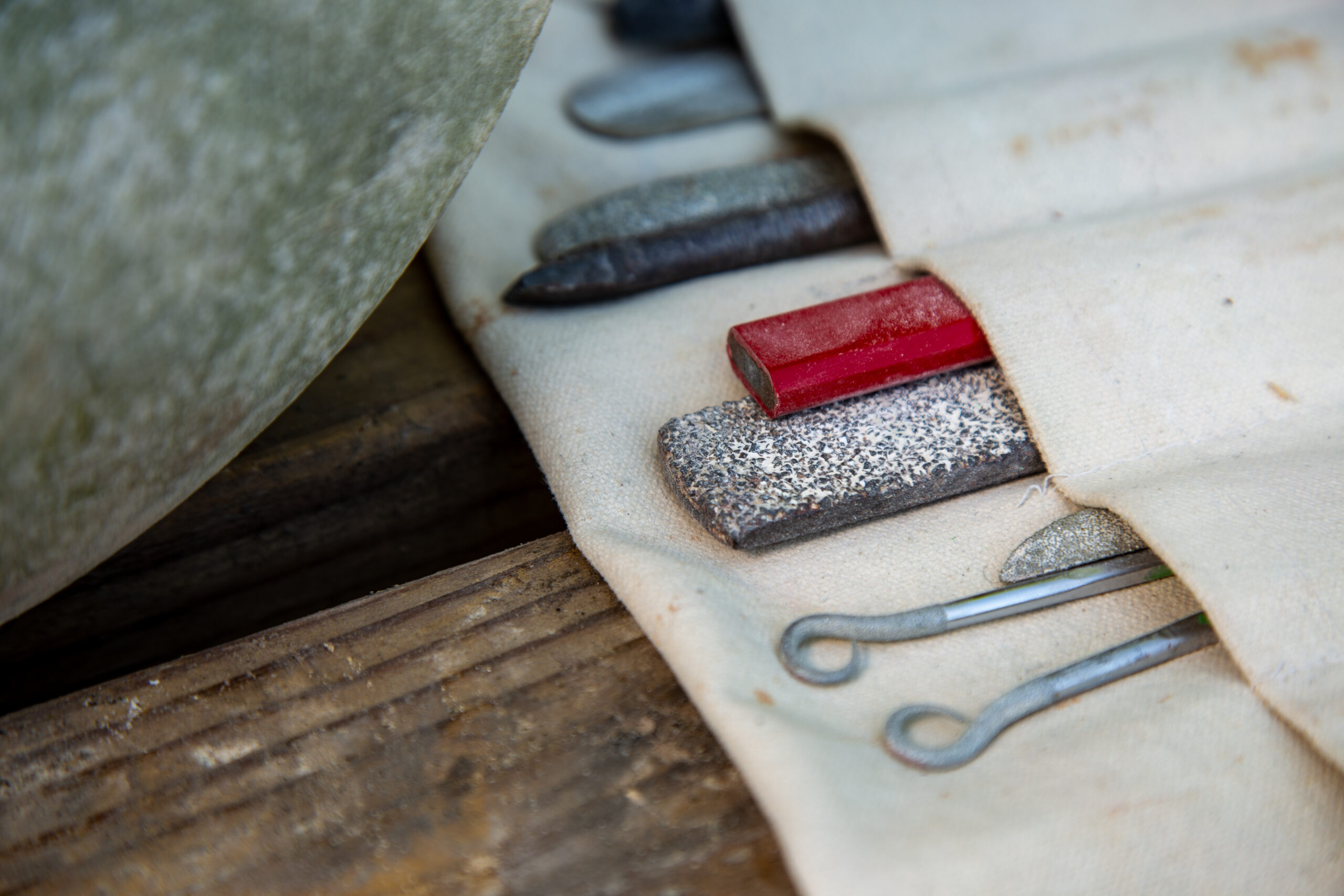
Stone sculpture is not what you do if you want a gentle art hobby.
“It’s one of the roughest art forms you can have,” Warwick says. “Everything is heavy. Everything can hurt you.”
Warwick’s skills caught the attention of her art instructor, who was planning to move away and wanted her to take over the stone sculpting class. When he asked in August 2018, Warwick rejected him at least twice.
“I told him no, and he accepted the no,” she says. “And about a week later, he asked again, and I told him no. ‘Why are you asking?’ And he says, ‘Well, why are you telling me no?’ And so we went back and forth a little bit, and all this was over lunch … I like to say he wined me and dined me at the Taco Bell.”
Warwick eventually told her instructor of her apprehensive feelings about performing techniques she wasn’t familiar with, especially considering the craft involves working with dangerous equipment. The instructor offered to mentor her before he left town. She agreed to that and took over the classes in June 2019 at 58 years old.
The pandemic ended up being a turning point. The media attention from her “art yard shenanigans” earned her a commission to create a sculpture memorializing Virginia Savage McAlester, an influential Dallas historic preservationist who died in April 2020.
From then on, she found a way to make a living from creating and teaching stone sculpture, including through more commissions and selling art on her website.
She attributes at least some of her artistic creativity to her mother, who painted but didn’t pursue it more than her own responsibilities, probably because of the culture around women’s opportunities of the time. Warwick praised her mother’s work and says she even gave Warwick suggestions on sculpture projects before passing away last year.
Photography by Yuvie Styles
“I think that may be why I pursue it so heavily,” she says. “I don’t want it to be something that I just played around with. I want to make a statement. I want to make a difference in the world through teaching art, creating art, putting art out there that makes people go, ‘Hmm, what does that mean? What did the artist mean? What does it bring up for me?’”
Warwick is looking forward to creating sculptures that are 10 and 20 feet tall. The bigger the art, the bigger the statement.
“I want the world to be a better place, and this is how I’m supposed to do it,” she says. “It took me 60 years to figure that out.”