In our divided, often polarized world, it was refreshing to find that we could all agree on one thing: The goats at White Rock Lake were awesome! “Where are the goats today?” was a common question among friends, neighbors and on social media back in February and March. How about a goat recap and update?
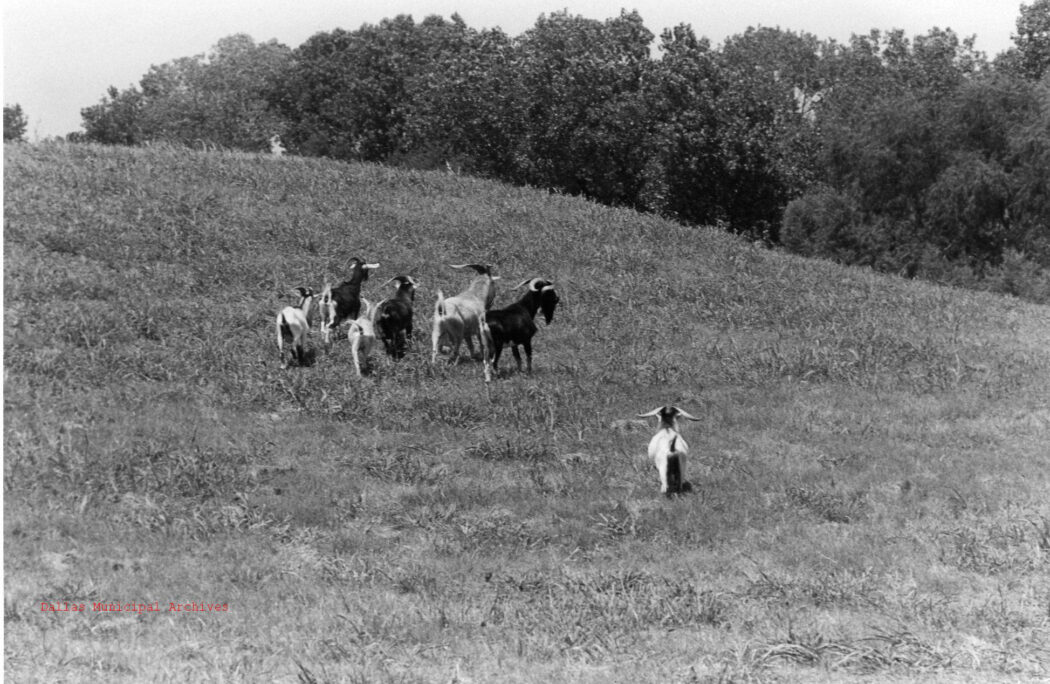
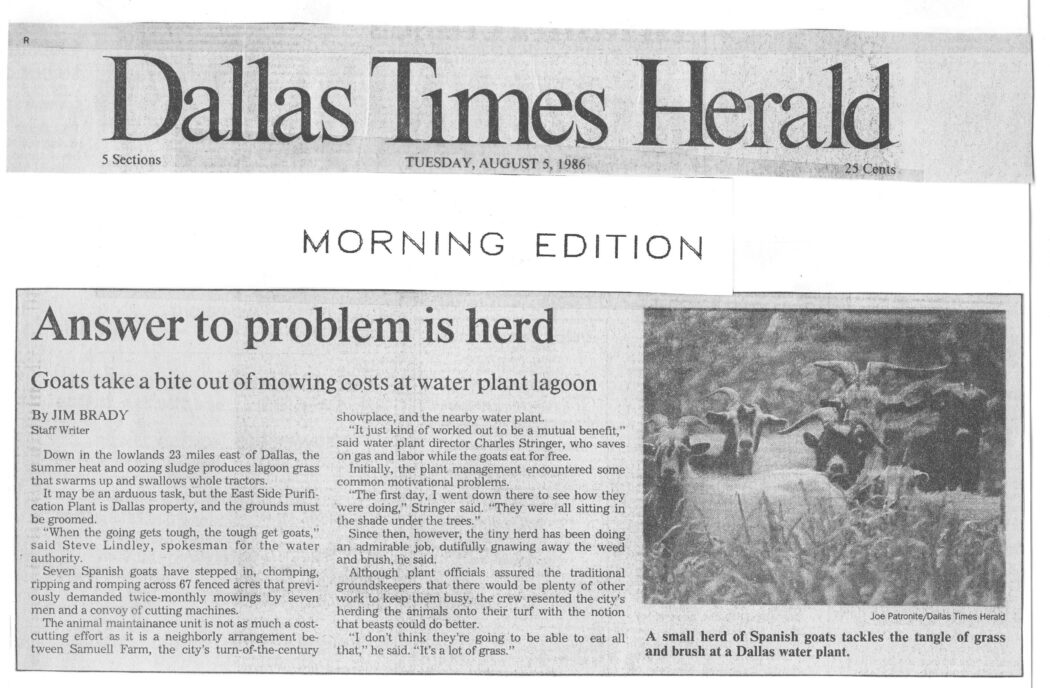
All photos and clippings courtesy of Dallas Municipal Archives from Dallas Water Utilities Collection 1991-060.
All told, around 300 goats, plus a few sheep thrown into the mix, helped restore about 26 acres around the lake “by thinning invasive plants and overgrowth, improving visibility and access, and naturally improving the soil,” says Brett Johnson, Superintendent of Environmental Quality and Conservation Manager for the City of Dallas.
The City had actually been toying with the goat idea for several years. As a joint effort of forestry and conservation city staff, a group known as the Forestry Technical Team, their pilot program occurred a few years ago at Frazier Dam, near Dallas Love Field. The goats also reported for duty near Bachman Lake, Northaven Trail and other locations before taking the stage in East Dallas.
For the goats at the lake, the City contracted with a farm in the Weatherford and Mineral Wells area. A shepherd remained with the goats constantly, to control and protect these important workers.
From the time the goats arrived on Feb. 5 until they were loaded up to leave on March 3, folks from all over East Dallas and beyond came by to take a gander at the herd. The first couple of days, as the goats and scattered sheep grazed on the hilly grassland above Bath House Cultural Center, visitors trickled by, approaching quietly, almost reverently, to see the ruminants at work.
Word spread quickly and crowds grew. Families and couples and groups of friends came by to watch the goats. The occasional street vendor or ice cream truck added to the carnival, county fair atmosphere. But all the while, the goats ignored the curious onlookers and continued their grueling work of eating plants they loved. One Sunday morning, the goats munched away at delicious privet berries, completely oblivious to the group playing pickleball on a court just a few feet away.
The goats were entertaining and a source of joy for many, but they were also a tool in the fight to preserve precious prairieland and forest around the lake. Despite our modern technology, goats are often the best choice for a natural, eco-friendly approach to clear land. For humans, the work is labor-intensive, and machinery like mulchers and mowers can remove other plants needlessly.
Johnson explains that one of the objectives for the goats was thatch reduction. “Thatch is the layer of dead grass and plant material that builds up on the soil surface over time. In unmanaged areas, this layer can become thick and limit new plant growth.”
As they grazed in grassy areas, the goats converted their plant diet into manure and urine, which were quickly returned to the soil and replaced nitrogen and organic matter back into the system.
Johnson and his team were thrilled with the results. “On the thatch issue, they did a much better job than we were initially thinking.”
In the forested areas, the goats happily munched on privet, an invasive plant. “These plants can outcompete native grasses and reduce biodiversity,” says Johnson. “Goats are particularly effective at browsing these woody species, stripping leaves and even bark from plants up to several feet high.” You may have noticed many of the goats standing on their hind legs, reaching for higher berries and leaves. “Repeated grazing can weaken or kill these species, helping maintain open grassland conditions and supporting a more diverse plant community.”
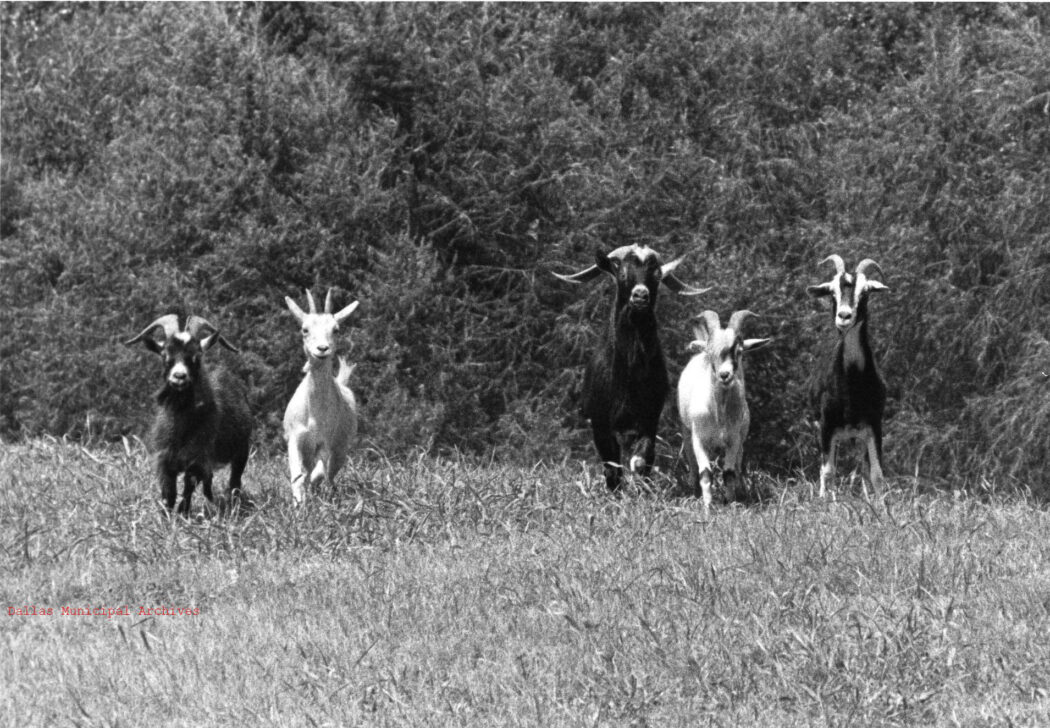
Once they had munched their way through land stretching from Mockingbird to the Bath House Cultural Center, it was time for the goats to move on. Mission accomplished? “Very much so,” says Johnson, “but understand as the spring growing season unfolds, it may not be super noticeable after a few weeks. But if we can run the goats through the same area for two or three years, we will start to see a major difference.”
The question everyone is asking: Will the goats be back? Yes, assuming Johnson and team can find the budget and support. “Hopefully, next fall to early spring period. They have the biggest impact on privet in the winter when it’s the main species that’s green, and the berries are on the tree.”
While it was not the simplest task to manage 300 or so goats, the results speak for themselves. Bonus: the goats raised awareness of the need to take special care of the land around the lake, plus the effectiveness of using a creative, natural solution. Johnson smiles, “They have helped put a spotlight on the conservation efforts of the Dallas Park and Recreation Department and Forestry Technical Team’s conservation efforts.”