Photography by Yuvie Styles
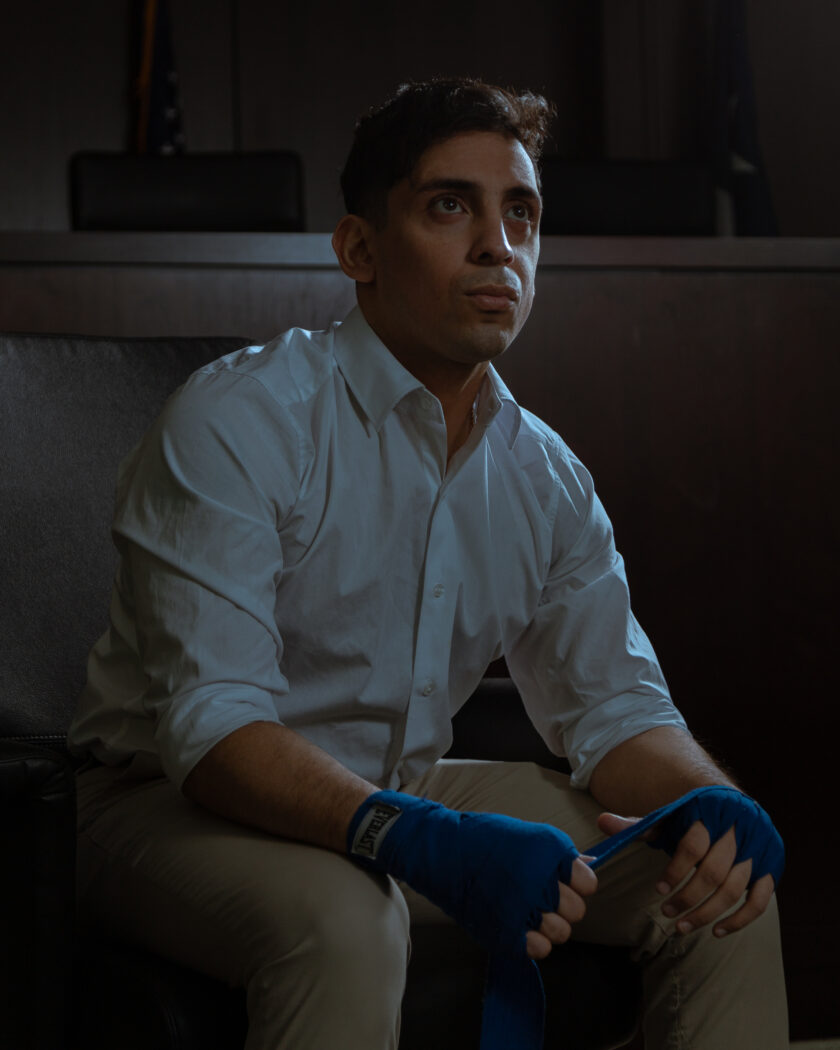
Noe Mendoza Jr. has a bit of a sniffle. He explains that his professor had been sick the previous weekend and since then, his classmates had been dropping like flies. Coughing, sneezing and a slew of other symptoms played a game of tag between him and his peers. It would seem that on this particular day, he was ‘it.’
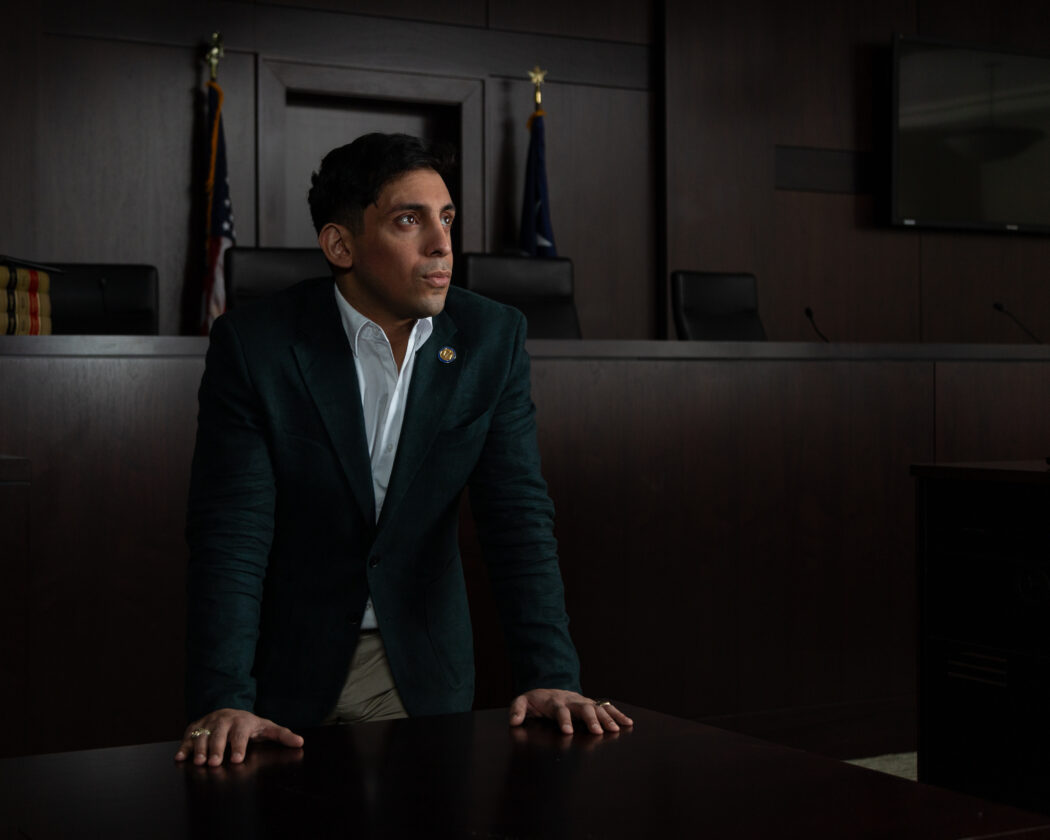
Perhaps being sick is the only time things truly slow down for Mendoza, and maybe not even then. He’s a second year law student (also known as a 2L) at the University of North Texas and a boxer.
Law school is what brought him to Lakewood. While the South Texas-raised law school student was no stranger to southern hospitality, he found the charm of our neighborhood to be something unique.
It had been a year and a half since his arrival and the more he explored, the more he found to indulge in. He especially enjoyed running down Swiss Avenue.
“You have people walking their dogs, kids playing outside and so it really just brings that lively, vibrant energy that you would want from a neighborhood,” Mendoza says. “I really just enjoy living here.”
Mendoza is admittedly still exploring the neighborhood, having to find time between school and training for fights.
His last round of training took place in March and lasted three months. At 5 a.m. he’d be jogging four miles, before he would go to boxing training from 6 to 7:30 a.m. and head to legal training from 9 to 5 p.m. The days would end with another four mile jog at 6 p.m. before reading for classes from 7 to 11 p.m.
Three months in the metaphorical ring, all in preparation for the real one.
The Undercard
When Mendoza first slipped his hands into a pair of boxing gloves, it wasn’t for fun and it wasn’t for sport. It was for self defense. Mendoza considered himself a bit of a “wimp” when he was a child. He was smaller than the other kids and was a late bloomer, making him the subject of bullying.
His father was an amateur boxer, who had taken on some professional fights in Mexico. After expressing concerns about his son’s safety, he began to take Mendoza to a boxing gym.
“He told me, ‘Look, I’m not gonna push this on to you, I just want you to be able to defend yourself,’ but I really enjoyed it,” Mendoza says. “I found it therapeutic.”
Soon enough Mendoza took such a liking to boxing that his father used it as a tool for him to get good grades, stating that lack of consistency on a report card could mean no more boxing.
He made it clear to Mendoza that learning to box was secondary to school and that the goal wasn’t to become some sort of “champion.”
But Mendoza was eager. After dabbling in other sports, he picked the gloves back up around his senior year of high school. He and his father ended up opening a gym.
“When I say ‘open up a gym,’ it’s not like, we got a warehouse and we got funding through the city or anything,” Mendoza says. “We just extended our house, the roof on our house, and we converted our carport into a boxing gym.”
Kids in the neighborhood began to marvel at the home gym and watched Mendoza with a sense of awe.
“Maybe you should train them,” his dad would say.
Mendoza wasn’t too keen on the idea. He wanted to focus on his next steps after high school, and plus he didn’t even know how to coach. It took some convincing and it took some time, but eventually he started coaching the kids for $1 a day.
Mendoza recalls, in the summer of 2012, two kids approaching him before a session. The pair were brothers and carried brown sandwich bags with them. They handed the bags to Mendoza — filled with potato chips, ham and cheese sandwiches and sodas — saying that their parents couldn’t couldn’t pay the $1 fee.
“Can we still train?” the pair asked.
They had paid for the meals with their food stamps.
“I was lost for words at the time. Even right now, it kind of brings tears to my eyes,” Mendoza says.
The conversation was unsettling to Mendoza. He had to figure out a solution. He consulted his father, who he consistently refers to as “strategic,” “calculated” and the “most reasonable man” he knows.
His father offered him a familiar solution: have the kids turn in their report cards. Good grades mean you get to train.

Photography by Yuvie Styles
The Main Event
Mendoza had dabbled with the idea of pursuing boxing professionally, something that he now reflects on as a “foolish” idea. His father gave him an ultimatum: live with him for free and go to community college, or pay rent and get a full time job while pursuing boxing. The third option silently loomed in the words not said — go out and find his own path.
“Given those options, I chose to go to school,” he says.
Two years later, he graduated from the community college and went on to Texas A&M University, studying philosophy and founding their boxing team. He was inspired after watching a taekwondo tournament in the recreation center on campus, waiting in line with other guys for a punching bag.
“Our interest drove us to ask the right questions, and we eventually got in contact with people on campus,” he says. “They gave us a step by step process on how to start a new club.”
By 2016, he had gotten the club off the ground but was unable to compete as a then-graduated student.
He was itching to put the gloves back on, to train. He decided to return to coaching. He began working at a local school district’s recreational center, coaching casual boxers and then would go to the campus, training students to compete. Then came 2018.
Photography by Yuvie Styles
“Our team eventually grew. We branched out. We started traveling to compete. We were allocated some funds through the state to go and compete and participate in competitions,” he says. “And we did that for two years.”
The hamster wheel of boxing and school is still going strong. Mendoza has since competed nationally and led athletes to securing their own victories, all while chasing the steady dream of law at UNT. He interns, and serves as a board member for both the Sports Entertainment Law Student Association and the Hispanic Law Student Association at the university, all while maintaining a healthy passion for boxing.
The sniffles persist but so does Mendoza, after all, he has family looking to him to succeed.
“I just feel like my family is counting on me in many ways to break the generational barriers that have kind of held us back for so many years” he says. “My grandfather took my father to go work in the fields as a kid, as a migrant farm worker — they worked the fields of Idaho and Michigan. And so when my dad would recount those stories to me I could see the pain in his eyes and how much he wanted more for his children,” he says.
To date, his father still runs the gym in the same fashion for young students looking to box, having report cards be the entry fee. Mendoza sings his father’s praises for keeping him on track, one grade and one life lesson at a time.
“I’m glad that I have somebody like him, who can help me find that balance between doing what I want and doing what I need to do,” he says.
What’s next? Is the daunting question Mendoza has been asked and is constantly asking himself. Moving forward, Mendoza plans on hanging up the gloves…for now.
“I want to kind of get away from being a student leader and now, I want to take the fight to the courtroom,” Mendoza says. “That’s what I’m really gearing myself towards, for the next stage of my career.”