Texas Women’s Foundation, based in our neighborhood between North Central Expressway, Caruth Haven Lane and Greenville Avenue, is celebrating its 40th anniversary.
In honor of that milestone, the foundation is hosting its Ruby Anniversary Luncheon at 11:30 a.m. Friday, Nov. 14 at the Omni Dallas Hotel in Downtown. The event will celebrate the nonprofit organization’s founders and feature acting legend Christine Baranski (known for The Gilded Age, Mamma Mia! and, a favorite from this writer’s childhood, How The Grinch Stole Christmas) as its speaker.
Texas Women’s Foundation President and CEO Karen Hughes White took time away from planning the luncheon to talk about the foundation’s history and legacy.
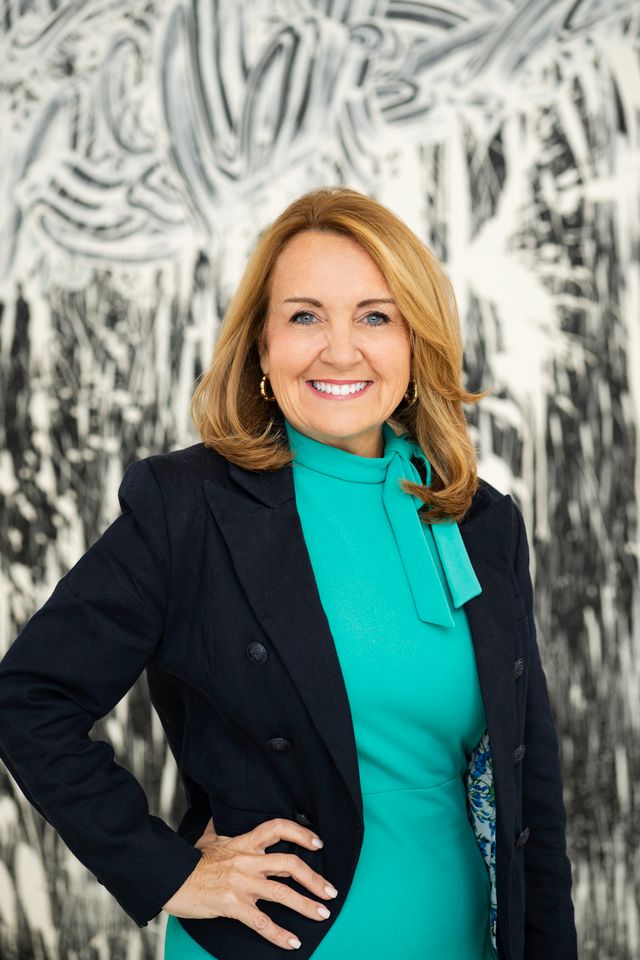
Texas Women’s Foundation President and CEO Karen Hughes White has been in her role since April 2024. Courtesy photo.
With Texas Women’s Foundation celebrating 40 years, tell me about why the foundation was created.
It was the summer of ’84, and Helen LaKelly Hunt, who was a local philanthropist and a scholar, and the Honorable Harryette Ehrhardt, who was on the Dallas City Council at that point — the only woman on the Dallas City Council — gathered a group of women in Harryette’s home to talk about the possibility of starting a foundation that would invest in women and girls, serving causes. What led them to do this, really, was their frustration in the historic underinvestment in women and girls, serving organizations for women and girls … and then their belief in the power of collective philanthropy to drive change.
The two of them coming together with the late Maura McNiel, who was also a community leader, really put the bones together of what became about a year later, the Dallas Women’s Foundation. … They discussed what this thing would be and wouldn’t be. They put some structure around it. They wrote their bylaws, they elected their first board, and they hired an executive director. They also raised about $100,000 in startup funds. So these women were busy. There were 19 of them, and they were very diverse by any stretch, certainly in 1985 but even today. And there was diversity, obviously, of race and ethnicity, but also diversity of thought and perspective, political ideology. It was a really interesting group of women. And there were women of significance in the group and significant means, and then there were also women who knew exactly where funding was needed and could go to drive impact. So it was the beauty of all those diverse perspectives coming together that helped this thing get off the ground and have impact within its first year.
So they set up shop in ’85 in September. May of ’86, they have a luncheon. They invite, through friends and connections, Elizabeth Dole to speak to the group, and they have 1,500 women in the Chantilly Ballroom at the Hilton Anatol, nine months after they founded this thing, and they made, netted $50,000. … They couldn’t fathom that amount of money. They had this goal right off the bat to make sure they were impacting the community. So right after the luncheon, Becky Sykes, the first board chair, led a discussion with the board. Lots of deliberation and careful consideration. They decided to grant half of the proceeds out into the community to women and girls-serving organizations and to save half to start an endowment. So here, they were already thinking about the future, which is what we now have the pleasure to build on is that legacy of leadership and the vision that this thing would need to continue. So they gave out just around $25,000 to seven organizations. Now the foundation is giving almost a million dollars a year to the community, and since 1985, we’ve invested nearly $90 million in grants alone to improve the lives of Texas women and girls.
As far as we know, we were actually the third ever women’s fund or foundation in the country, behind … San Francisco and then what had started in Minnesota. … It quickly grew between the mid-’80s and the ’90s, and we became part of what’s now known as the women’s funding network. So in a lot of ways, the Texas Women’s Foundation was a pioneer in the women’s funding movement, which was really coming into its own in the mid ’80s as women were working more, had their own funds to spend, had fewer restrictions around what they could own and have. For many years, women couldn’t have property in their name; they couldn’t have their own credit cards. So this was the era where women were starting to experience more financial freedom, and this group of women really wanted to do two things — they wanted to empower women’s philanthropy, and they considered every woman a philanthropist. If she could give $100 or a million dollars, she was participating in philanthropy. They also wanted to ensure women’s financial literacy. As women were coming into their own, they really wanted to help empower financial independence and economic security.
We continue to follow the north star that these 19 founders sort of set in the sky for us, and it is so fun to celebrate 40 years. … For somebody like me, it’s just an honor to continue this legacy.
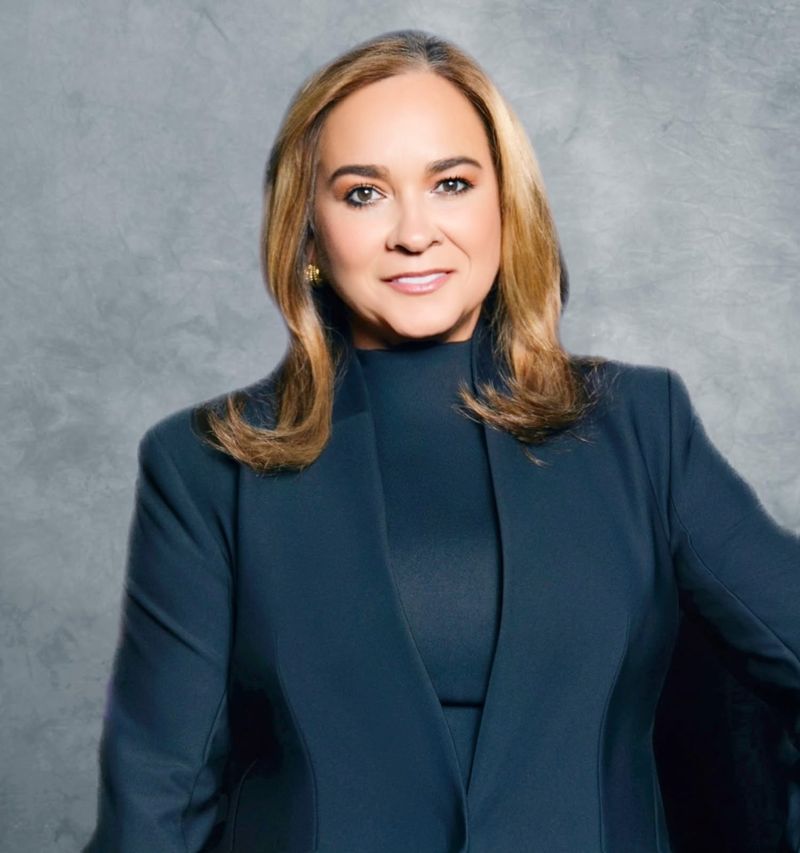
Texas Women’s Foundation’s Board of Directors is led by Chairperson Cris Zertuche Wong. Courtesy photo.
The needs and why the foundation is still around today:
What we know today is that the need is great, and maybe as great as it’s ever been for women and girls in Texas. There are 14.7 million of us. Texas has the highest rate of uninsured women in the nation. We rank 47th out of 50 states across 25 different indicators of women’s economic security. Yet we have the largest economy in the nation, $2.4 trillion, and if Texas were a country, it’d be the eighth largest economy in the world. We have to do better than this, and Texas Women’s Foundation feels like it’s our responsibility to provide the data. Our biannual research report is something that we share widely, freely, loudly, trying to amplify the issues. What are the challenges? What are the barriers to women’s economic, security, stability and success? And if we can identify those barriers, we can identify solutions, and those solutions are going to be collaborative and scalable because the problems have not aged well. They’re getting bigger and broader in scale.
We see health care access as a barrier to women’s economic security, stability, success; access to affordable childcare. So there are two issues on the childcare front — access because half of Texans live in a childcare desert. There’s three or more kids for every available spot, and then it’s practically unaffordable. The average cost of childcare for an infant is nearly the same as a year of tuition in a state college or university. It’s just shy of $10,000 a year for full-time, year-round childcare. So if you can find it, can you afford it?
We see housing, stable housing, as a challenge for women. So often, women are really the face of poverty in Texas, particularly young women, between the ages of 18 and 24. And then just those pathways, whether it’s career and workforce development or professional development, it’s those pathways to opportunity that we’re working to create, and that way, we partner with others to create those other learning opportunities, either through our grant making or through partnership and collaboration on supporting various leadership and workforce development programs.
The vision around building a strong and vibrant Texas for everyone by investing in women remains the core. … An investment in a woman creates a ripple effect that allows all boats to rise. So when we envision a strong and vibrant Texas for all, we know about the importance of investing in women. … In turn, women will invest in their families and and their communities.
On Texas’ near-total abortion ban, specifically:
It is something that the foundation cares deeply about, and it has a huge impact on women’s economic security. That work around reproductive freedom and care has continued. We are still funding in that space to the extent that we can. Our support since the Dobbs decision has focused on sex education, access to contraception (no questions asked), including long-acting reversible contraceptives. Again, making sure that women have this in this state, women have choices, at least, where they do and can right. We have always supported reproductive freedom, and continue to, access to reproductive care right in the ways that we can. That also extends to focusing on pre- and postnatal care, particularly for women in underserved communities and women that have the highest incidence rates of maternal mortality; frequently, that’s women of color. So in addition to grant making, really across that area, all of our sort of pillars, we’re engaged in advocacy work. We have a presence in Austin. We use our research to guide that work. Our research helps us develop a legislative agenda.
We are advocates in and of our own right, but we are also partners. Part of our advocacy strategy on these issues — grant making alone will not get this done — is to serve as a resource and a partner, so providing access to our research, leveraging our network of supporters, and then to the extent that we can, being a resource. If organizations or associations are in need of expert testimony, we’re a connector in that way and a convener in that way. And so we advocate to the extent that we’re able, as a 501(c)(3), and we partner and serve as a resource in other ways to just maintain the integrity of our organization, our commitment to being a charitable organization.
Can you talk about the organizations that the foundation supports and how that is decided?
We start with our research, which really outlines the core issues, and then within those pillars, if you will, we are seeking organizations that are really, really driving impact. We have a committee, a volunteer committee, that represents voices from across the community to ensure that our North Texas Community grant making is actually community informed. … It’s research informed, and then it’s community informed. And increasingly, as we review applications from organizations, we are checking to make sure the programs and services they’re offering are trauma informed because we understand the role that trauma plays in the lives of Texas women and girls, and to ensure the most effective service and help, we want to make sure that these programs are aligned with what’s really happening in women’s lives, so we can meet women and girls where they are. I’ll say that our grant making process has become a model within the women’s funding movement. From the start, we actually started with a community needs assessment in 1984 to guide our grant making. Two years later, we had a grants committee. … They spent a year outlining funding criteria and grants guidelines. So from the start, the decisions around grant making have been very deliberate and very intentional. We are the Texas Women’s Foundation, so the organizations we support do have, programmatically and through their direct service, a focus on women, not exclusive but a primary focus on women.
I think one of the things we’re really proud of is that we have often served as an incubator for new nonprofit organizations, making that first grant to an organization to get them up and going and then supporting them through those early years. Organizations that we’ve supported in that way include New Friends New Life, The Family Place. Some of those organizations that have served our community for so long, or maybe in recent years for emerging Issues like New Friends New Life, their focus on trafficking, not sure we were really talking about that in 1985, but we sure are today. Whether it’s The Family Place or an emerging organization like New Friends New Life, we’ve often provided that seed granting to help them get going. High-Tech High Heels is an organization that started with a donor advised fund at Texas Women’s Foundation, and now has a national footprint and is investing in women and girls in STEM and that started with a group of very passionate women from Texas Instruments who who grew that thing over time and then spun it out and off. So again, back to that north star around empowering women’s philanthropy. That’s been a really fun thing to watch, that with help from an organization like ours, who sees the need, believes in the mission of an organization and funds it, then watches it launch and do amazing things and achieve great impact — that, in and of itself, is a huge honor.
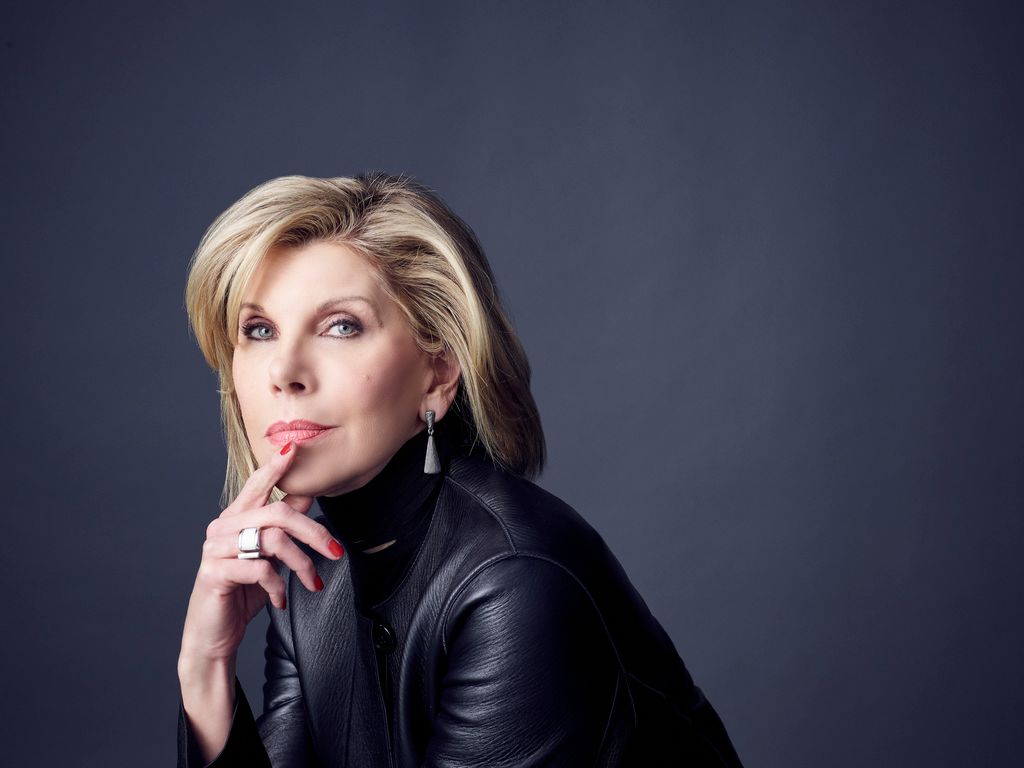
Acting legend and equal pay advocate Christine Baranski will be interviewed at the Texas Women’s Foundation Ruby Anniversary Luncheon. Courtesy photo.
Why is the luncheon an important event for the Texas Women’s Foundation?
The luncheon gives us an opportunity to really showcase the mission and put the mission on display and bring it to life for people. As a foundation, we are supporting other organizations, so the ability to highlight our grantees and the work that they’re doing in the communities they serve, that’s the privilege we have at an event like the luncheon. It’s also fun to bring people together in support of a cause that they care about so deeply, to be in a room full of friends who care about the same things you do, particularly in the here and now when the world is so divided, just think there’s power in being together. There’s strength in numbers. We hope to inspire people to have faith right, to keep the faith as they leave the luncheon, and to take those good feelings right and put them into action in their own ways, through their philanthropy, their volunteerism, their advocacy. It’s a little bit of a showcase and a little bit, or a lot, of inspiration, some fundraising, too. We do fundraising in the room to support the mission and find that people are incredibly generous as they attend our events. We’re very grateful for that. In honor of our 40th year, we have a $40,000 anonymous matching gift for in-the-room giving. So we are hopeful of achieving that and more in the room.
What do you envision for the future of Texas Women’s Foundation?
We are embarking on a very ambitious strategic plan, three-year plan, that really has the foundation doubling down in our role as an advocate for Texas women and girls through our research, through our advocacy and through intentional grant making. You’ll see us really lead with research and work toward increased collaboration with other organizations, women and girls-serving organizations, foundations, corporate partners. You’ll see us investing in co-funding opportunities to drive scalable solutions, and you’ll see us investing further across the state with support from our donors and several national funders. I think these times are going to demand more focused collaboration to drive meaningful change that lasts, that kind of systemic change. Working together, we’re going to get there faster, and I think that’s what the current climate requires. So I think you’ll see more partnerships, in addition to our ongoing community grant making — we will never leave that behind — but looking more broadly across the state and looking more broadly at our partners on how we can come together to transform lives.
More about the luncheon here.
This interview has been edited for clarity and brevity.