Continuing our coverage of neighborhood efforts to gain control over problematic liquor-related uses in East Dallas, a task force appointed by the Plan Commission to study the issue will report back to the Commission in several weeks.
Despite substantial input that was provided by residents of Munger Place, Swiss Avenue and other Old East Dallas neighborhoods (stressing the importance using land-use controls through a dry overlay or amending the Zoning ordinance), the report recommends improving enforcement activities by the Texas Alcoholic Beverage Commission and the Dallas Police Department.
All along, the neighborhoods have contended enforcement has been inadequate. The report does contain some new ideas about how the enforcement system can be improved, mainly by making it more “holistic”; that is, combining the efforts of TABC, the police department and code inspectors.
The neighborhoods are offering qualified support to the Task Force recommendations, which apply only to East Dallas, essentially taking a “wait-and-see” attitude.
If the new enforcement program isn’t having much impact within a reasonable period of time, the Dry Overlay District probably will surface as a neighborhood goal.
Following Plan Commission approval, the City Council will review the issue. Districts represented by Councilmen Lori Palmer and Chris Luna are most directly affected, while a number of Councilman Glenn Box’s constituents also have taken an interest.
Contact your Council members, and their Plan Commission appointees, if you want to continue pressuring elected officials to take action. Be prepared to participate in public hearings in order to beef up what so far have been fairly lackluster enforcement efforts.
WORTH STREET HEARING: Deed restrictions on Worth Street multifamily property between Alcalde and Carroll streets will be reviewed Aug. 12 by the City Council. The issue involves a four-plex adjacent to single-family homes.
The deed restrictions are designed to ensure the property will not be redeveloped at an even greater density in the future. The Plan Commission also is expected to authorize a public hearing concerning that block to determine whether a Planned Development District for residential uses is appropriate.
The district would provide neighborhood residents with an opportunity to help “customize” the area’s zoning, achieving some predictability for future uses.
UPDATE: The Specific Use Permit for a child-care facility at 817 Martinique, south of Lindsley, was unanimously denied by the Plan Commission because of its location in the middle of a residential block. The Commission also believed the facility could create traffic problems for neighbors.
The Plan Commission approved a Specific Use Permit for a medical laboratory at 4004 Worth, near the Baylor Hospital complex.
BRYAN AREA PERMIT REQUEST: The Planning Department has been contacted by La Posada, a non-profit social service agency at 921 N. Peak, regarding obtaining a Specific Use Permit for its activities.
The location in question, at the northwest corner of Peak and Gaston, is part of PD 298, which is the Bryan Area District.
Application has not formally been made, and City representatives have suggested that La Posada initiate contacts with Bryan Place and other area business and residential neighbors regarding its plans.
While La Posada has been operating at this site for several years, any such application requires evaluation on the basis of its impact on neighboring property. The next step, unless opposition begins to surface from neighbors, will probably involve the Plan Commission authorizing a public hearing on the SUP, at which point the City will begin its notification process for the surrounding area.
We’ll keep you informed concerning developments.
ZONING ISSUES DISCUSSED: The Zoning Ordinance Advisory Committee considered several issues at its June 22 meeting, including Councilman Jerry Bartos’ proposal that the City abandon its prohibition concerning advertising “home occupation” businesses. Currently, such businesses can operate in a private residence only if they do not advertise off-premises, for example with a detached premises sign such as a billboard or in the Yellow Pages. Bartos contends that technology allows more people to work at home, making the advertising prohibition obsolete.
Of course, the countervailing argument is that such advertising might invite increased traffic, negatively impacting surrounding neighborhoods. Full debate on this issue is anticipated. We’ll keep you updated.
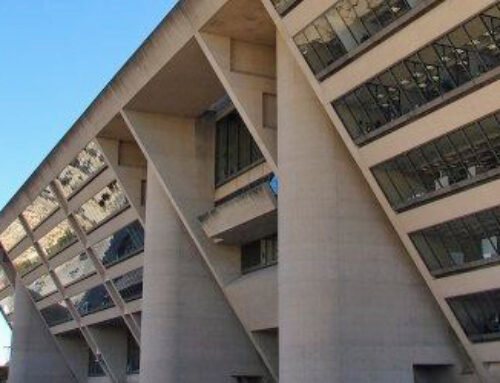
DOWNTOWN ON THE MOVE: Some good news for close-in East Dallas neighborhoods: The Central Dallas Association (“CDA”), an organization of Downtown business and property owners, recently formed a Downtown Improvement District to fund improved security and maintenance, as well as plant trees and enhance sidewalks, parks and lighting.
Anything that helps reverse the reality, or the perception, of Downtown’s decline is good for East Dallas. If you subscribe to the “hole in the doughnut” theory, knowing that you may end up living next door to the “hole” is unnerving.
Coupled with renewed efforts to develop housing in and near Downtown, these efforts have to be encouraging – and encouraged.