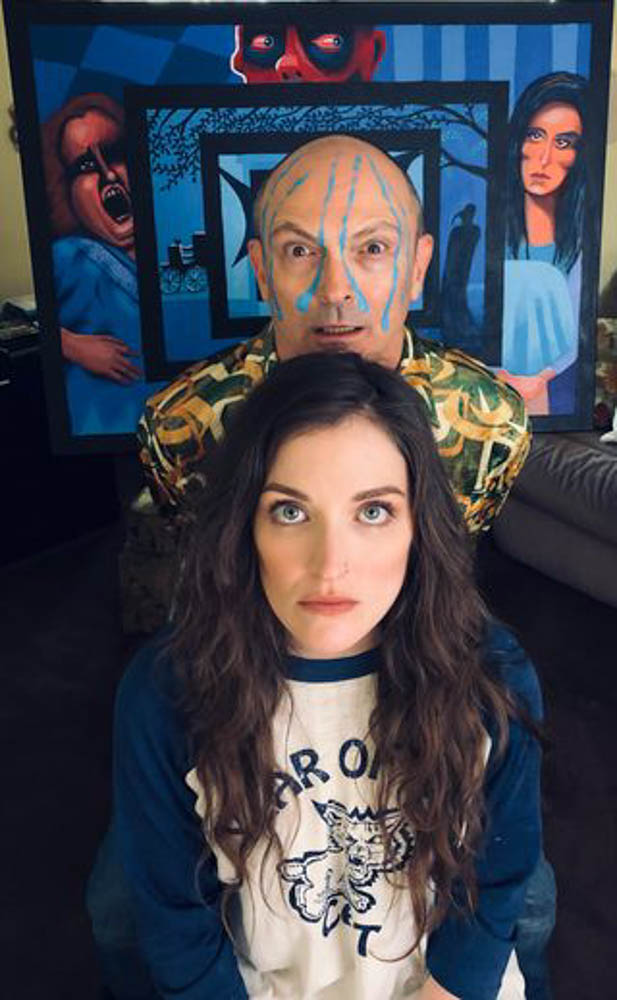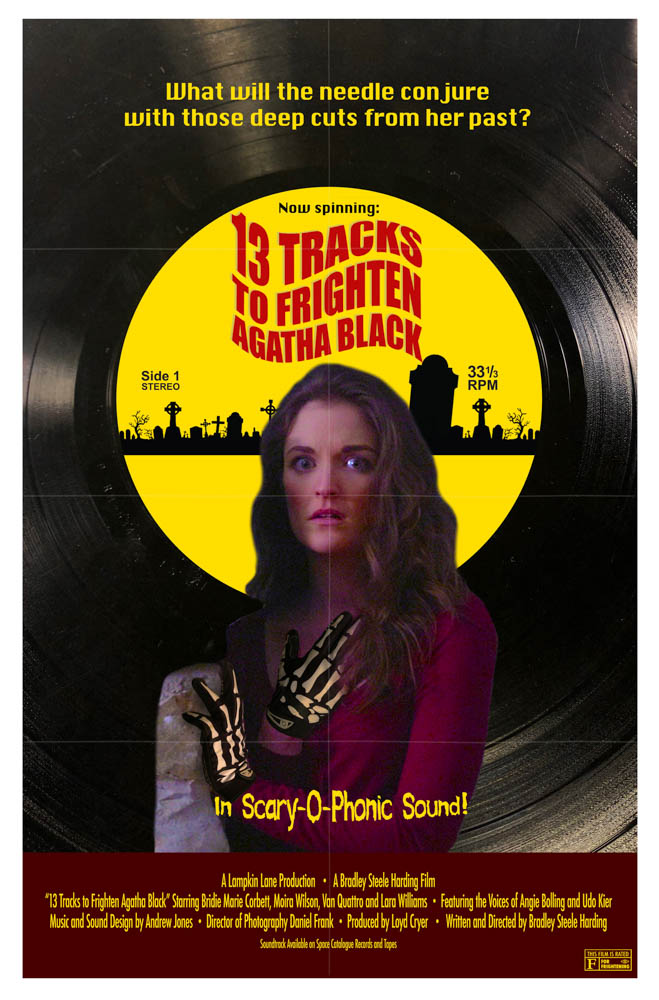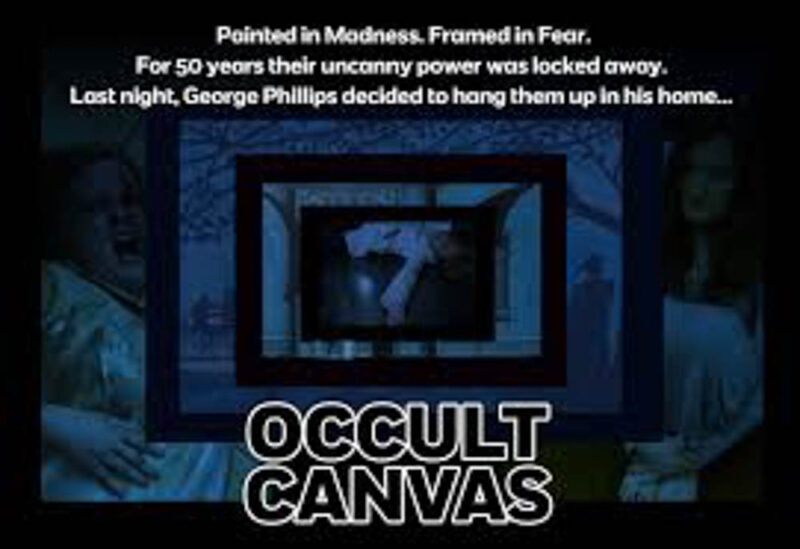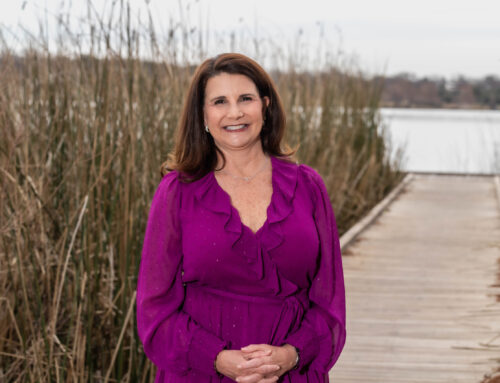

Actress Bridie Marie Corbett has worked with Harding on 13 Tracks to Frighten Agatha Black (2022) as Agatha and will be playing Kim in Occult Canvas. Photo courtesy of Bradley Steele Harding.
Bradley Steele Harding is no stranger to crafting a story. His earliest mode of storytelling was acting.
“What I learned through acting was that I wanted to be the person to call the shots. I wanted to be creating the story, the person driving the story. I didn’t necessarily need to be in the spotlight. So I think that from an early age, I wanted to create and create stories and create interesting things. And I always loved movies.”
It’s safe to say his love for movies began at his town’s local drive-in. His parents would take him and his brother regularly. His favorite films were horror movies. The gore, the acting, the plots — it was all little Harding could think about. After his parents separated, at around 8 or 9 years old, Harding began watching horror movies every weekend.
Horror became a full-time hobby.
The fascination with the genre continued and reached its peak when he stumbled across what would become a pivotal source of inspiration for his artistic trajectory: Fangoria. Flipping through those pages of the all-things-horror magazine — that he refers to as his “bible” — helped him realize he had to do something with all the inspiration he had gathered up.
“It was a huge influence in my life. That magazine made me want to become a writer as much as a filmmaker,” Harding says.
That magazine and his love of horror films became the “driving force” that took him from watching movies at the drive-in, to making them himself. After graduating from The University of Oklahoma, Harding came to Oak Lawn in 1994 with a desire to pursue production.
“I discovered very early on that I did not want to be in film production here or anywhere, actually, because I needed to be the person who was in charge,” Harding says.
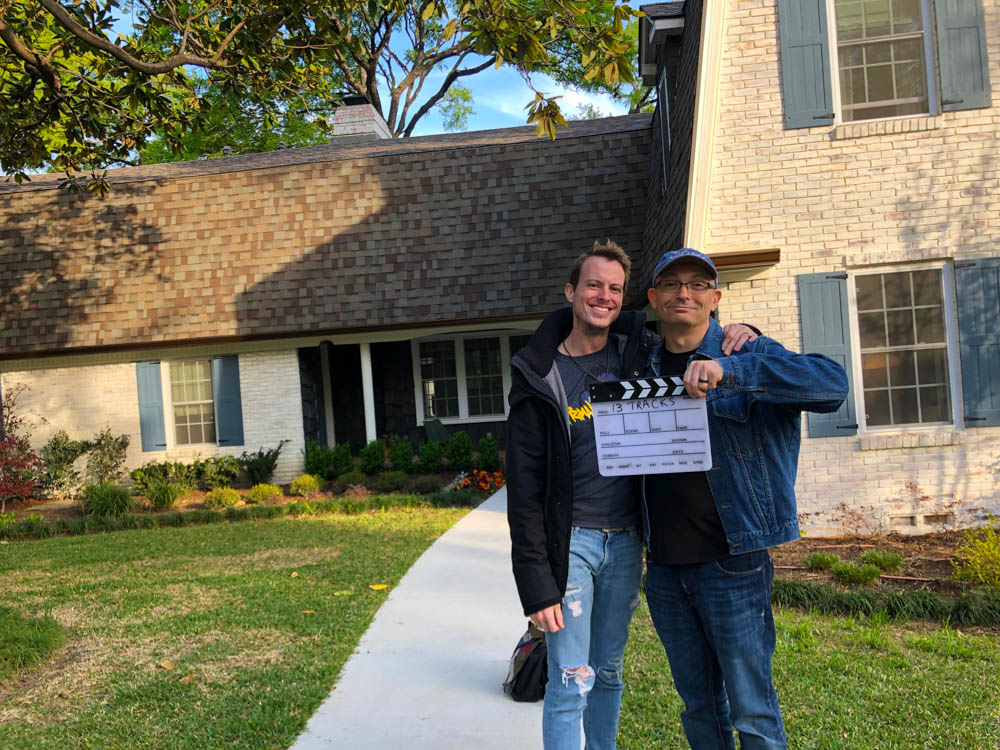
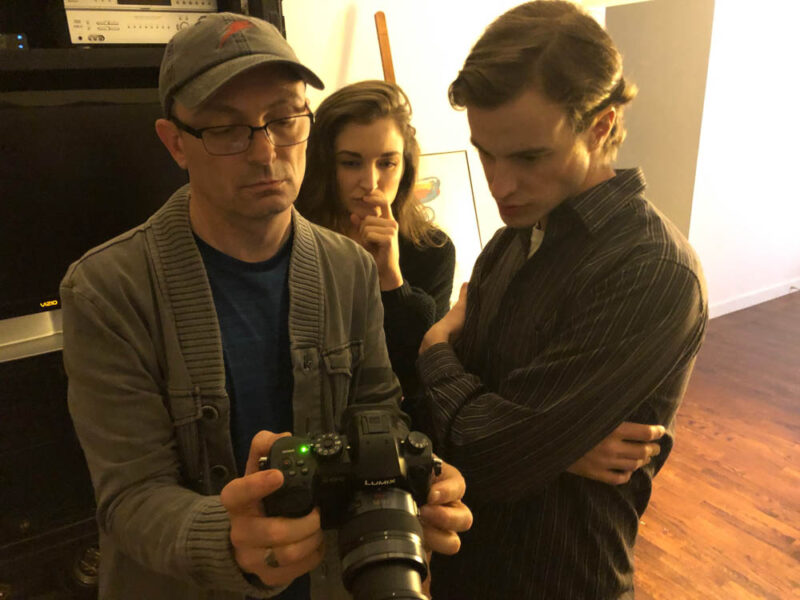
Cinematographer Daniel Frank (left) and Harding (right) on the set of 13 Tracks to Frighten Agatha Black (2022)
He didn’t like the way he saw films being made. Directors would sit in rooms far away from their actors, watching them through a monitor, and never speaking directly to them. He could feel how disjointed the story would become through the prioritization of efficiency rather than enjoying the process of storytelling. More importantly, it wasn’t fun. He realized that his experience was common.
Harding eventually moved to Lakewood in 1999 and was making a name for himself as an entertainment journalist and independent filmmaker, writing for several different publications, including Fangoria. He has since written and directed several digital shorts through his production company Lampkin Lane Productions and created his first feature film 13 Tracks to Frighten Agatha Black that was released in 2022.
He has slowly but surely found a rotation of crew and cast members he likes to have in his orbit while creating films. He loves them. He trusts them.
“It makes it so easy if everyone is on the same page and they’re excited about the work,” he says.
Now, he is a full-fledged storyteller and, armed with experience and passion, he gets to run his own movie sets.
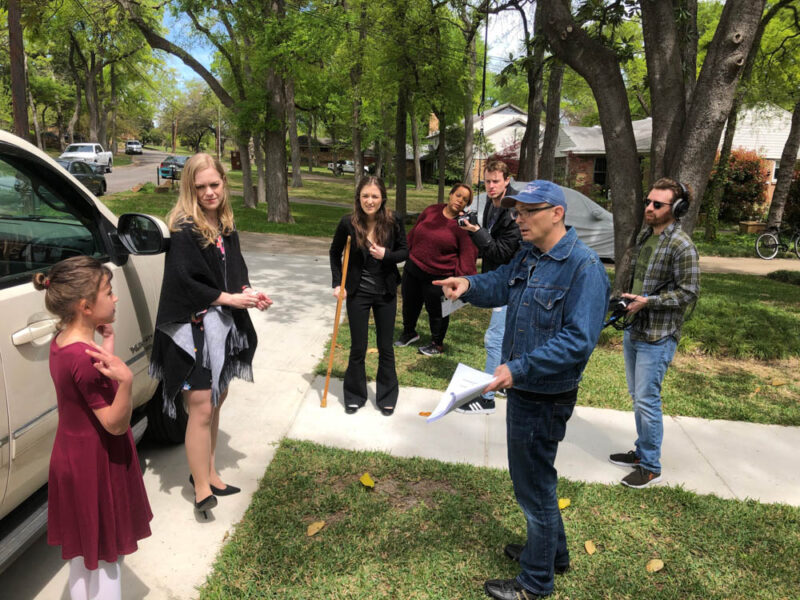
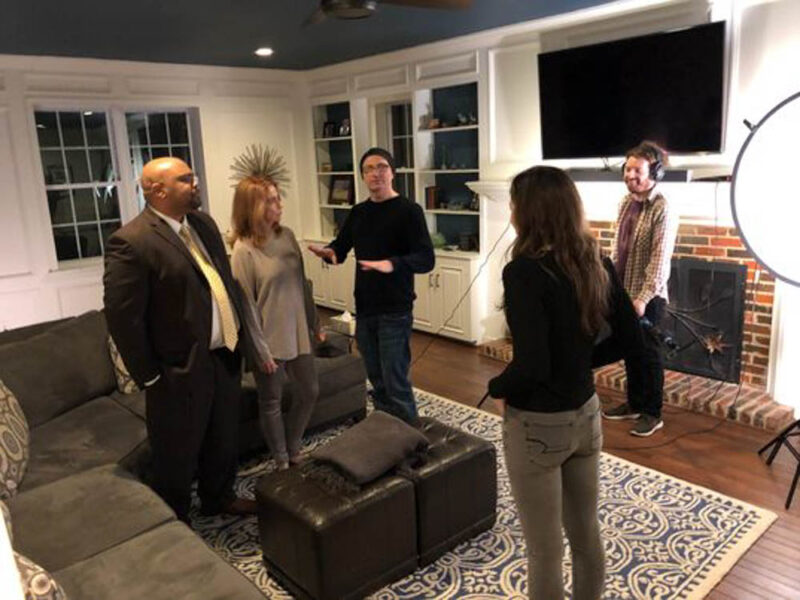
“My hands are all over everything,” Harding says. “My sets are very small and so I’m present. I am there for everything that’s going on during the time of production, for however long and I’m right there with the actors.”
His newest film Occult Canvas is in pre-production and is loosely inspired by the ’70s TV show Night Gallery and other TV movies from that era.
“Horror films made for television in the early ’70s have a very weird vibe and I want to try to capture that,” Harding says. “It’s a Valentine to ’70s TV horror, and it revolves around these paintings, these cursed paintings, and how they affect the people who have unearthed them. There are a lot of characters, and they’re affected in terrible ways.”
This new horror project is being filmed right here in Lakewood.
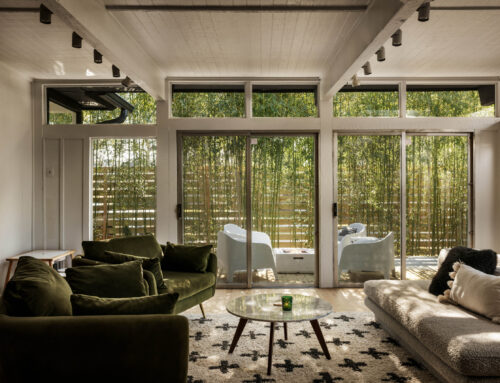
Harding took to Facebook to ask his neighbors for help narrowing down a home that fit the horror bill to shoot at. He was looking for something mid-century modern, with the same early ’70s vibe he was drawing inspiration from for the film.
“That Facebook post was very successful. I have really cool neighbors. I mean, Lakewood is just a cool neighborhood, and so a lot of people reached out,” Harding says.
This wasn’t the first time the filmmaker had turned to his neighbors for help. He shot his first feature film in the neighborhood and asked his peers to weigh-in on possible shooting locations for the project. The support he’s received from the community is one of the many reasons Harding has grown a a deep sense of respect for his neighborhood. But Harding’s love for Lakewood is based on more than just his cool neighbors. The neighborhood itself serves as creative inspiration on a daily basis.
“I write the script in my head before I put anything on paper. And I pace. I often will walk the neighborhood. I will walk the lake. All of the images in my head are informed by this lovely neighborhood, this eclectic neighborhood with these, you know, terrible new builds and old houses, and it’s just an eclectic mix of interesting architecture,” he says. “It’s informed by my relationship here with the neighborhood.”