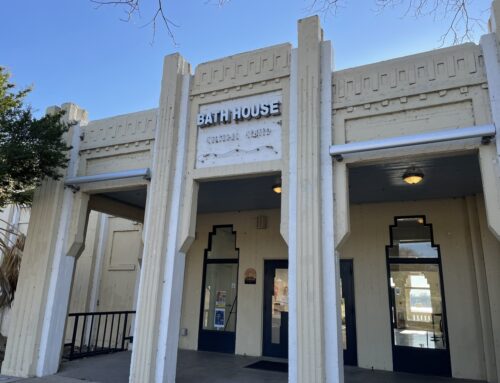
The second year of Echo Reads will kick off Tuesday, Sept. 10, at 7:30 p.m. at the Bath House Cultural Center . The performance reading series is put on by Echo Theatre, a company whose stated mission is to “unearth the power of the female theatrical voice,” says Ellen Locy, producer of Echo Reads and a producing partner of Echo Theatre.
Founded in 1997, the theater usually puts on two or three full plays per year. Some plays that carry important messages are beyond the theater’s reach, however, in part because the company is small and doesn’t have enough players to fill casting requirements. But the theater wanted to give these plays exposure to the public, Locy says, and thus, the idea for the performance reading was born.
In the performance reading, actors perform different parts in the play while a narrator reads stage directions. There are minimal sets and/or costumes, and actors may move around, but they still read from the script.
Kateri Cale, who frequently acts with the company and has also directed a performance reading, feels like this style of reading offers a more “visceral” approach to a public reading, rather than the straightforward presentation style that readings usually take.
“It’s nice for actors. They get to read a really interesting script, get a little money in their pocket with just a little rehearsal,” Cale says.
Locy says it’s a “win-win-win deal:” Producers enjoy doing the readings, audiences experience new plays, and actors gain more practice.
“We’re trying to take it up a notch from ordinary theatre reading,” Locy says.
After the readings, the cast and the audience discuss the play, something like a literary salon.
“We’re trying to get beyond ‘I liked that,’ ‘I didn’t like that,’ to what makes a play well written,” says Pam Myers-Morgan, a founder and producing partner of Echo Theatre.
Most of the audience comes from the East Dallas area, although the makeup of it is usually diverse, with families, elderly couples, church groups, women’s groups and other supporters of the arts.
“People have a great time when they come, and I enjoy that,” Locy says.
They have many plays to choose from, even with the female playwright requirement. Locy says she has not yet gotten into looking at international plays for options there.
She always picks an old revival as well for the series. Linda Leonard directed “He and She” in the first year, a play about an artistic rivalry between husband and wife and the wife’s choice between motherhood and career. Although the piece was written in 1911, she says the audience thought it was a contemporary play, proving that even older works can be accessible, says Locy.
A recent study says the number of plays by female playwrights getting produced is actually decreasing over the years, according to Myers-Morgan.
“What we do is more important than ever, getting these names and plays out into the public.”
The performance readings are on the second Tuesday of every month through December at the Bath House. The September performance will be of Tissue, by Louise Page, which explores one woman’s journey through breast cancer.
The series continues in the spring from February through May. Admission is free, although donations are accepted. For more information on performances, call 214-824-7169.