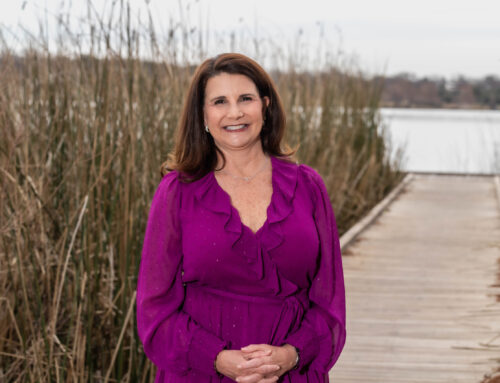
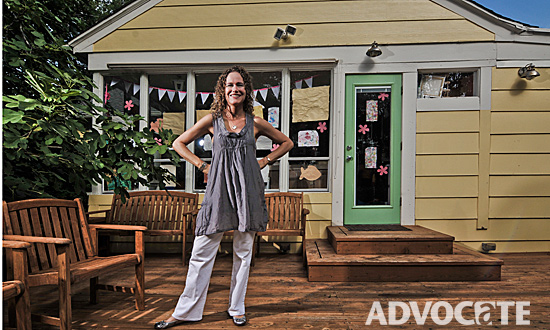
Sarah Cotton Nelson. Photo by Can Türkyilmaz
Neighborhood resident Sarah Nelson is finding better ways to spend charitable grants
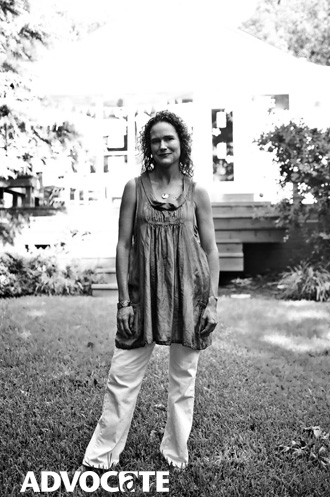
Sarah Cotton Nelson of the Peninsula neighborhood is chief philanthropy officer for the Communities Foundation of Texas. She is leading the foundation’s efforts to combat asset poverty. Photo by Can Türkyilmaz
Sarah Cotton Nelson oversees more than $79 million in charitable grants every year as chief philanthropy officer for the Communities Foundation of Texas. She has a light-filled corner office decorated with oriental furniture and a lovely garden view.
But this Peninsula neighborhood resident is not shelling out money from any ivory tower. Nelson’s experience running a youth center in downtown Los Angeles, plus a 13-year stint as a public policy researcher for the Rand Corporation, give her an invaluable perspective on how to best serve the nonprofits the foundation supports. In her role at the Communities Foundation, she has employed those insights to develop smarter spending.
Nelson and her staff developed the foundation’s Data Driven Decision-Making, or D3 Institute. The institute serves nonprofits that benefit the working poor, such as the White Rock Center of Hope.
“I understand the pressure put on these agencies,” Nelson says. “Sometimes, even if there is good data out there, they don’t always have the time and resources to understand what it means for them.”
When Nelson started working to bridge the gap between public policy data and the actual day-to-day of nonprofit agencies, she quickly realized she needed more information.
“All of the data on working poor was 10 years old,” she says. “So we didn’t really even know what we should be funding.”
The foundation hired the Corporation for Enterprise Development to study the working poor in Dallas.
The study found that 39 percent of people in Dallas live in asset poverty, meaning if they lost their main source of income, they could not support a household for three months at the federal poverty level. Put another way, it’s a family of three with less than $4,632 in the bank. The national average for asset poverty is 27 percent. Almost 20 percent of people in our city live below the federal poverty level, which is about twice the national average.
“It’s a startling revelation that two-fifths of Dallas households are one crisis away from serious financial trouble or even homelessness,” the foundation’s president and CEO Brent Christopher says.
The data showed the foundation that there is a serious need to support the working poor in Dallas, and it has made that a focus area for giving.
The study also found that about 20 percent of Dallas residents who hold a bachelor’s degree would not have the means to support themselves for three months if they lost their jobs. And asset poverty does not just affect low-wage earners. About one third of those earning $45,000-$70,000 in Dallas could not weather a job loss without falling into poverty. More than a third of Dallas residents do not have health insurance. And almost 70 percent have subprime credit scores.
Instead of unleashing that data on nonprofit agencies, Nelson wanted to ask the people who run nonprofits serving the working poor what their agencies’ needs are.
“They are the ones who know what the challenges are for the working poor,” Nelson says. “I would rather have them help us decide what to fund.”
The D3 Institute, a pilot program that is just getting underway, is designed based on what the nonprofits said they wanted and needed and what they are trying to achieve, plus the data to guide them.
“We want to make sure that information is translatable,” Nelson says. “What does it mean, and how can I use this information strategically?”
The institute provides each nonprofit with a data coach who helps them interpret the numbers. They meet about twice a month, and the foundation provides workshops for the nonprofits every one or two months for one year. Along with better understanding and focus, the workshops create a space for the agencies to communicate and collaborate, Nelson says.
“If you get them together, trends emerge in their needs,” she says.
The D3 Institute took its first class of nonprofits last month, and Nelson and the foundation will tweak it as they go, dropping aspects that are not useful and adding things that might help.
The Communities Foundation of Texas is the largest grant maker in Texas by dollar amount. The foundation gave $79 million in 2011. And Nelson wants to make every dollar of those millions count.
Find more information at cftexas.org.