The neighborhood-based festival returns to its original home, the Dallas Museum of Art
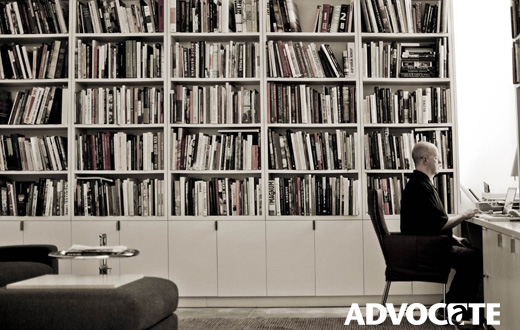
Neighborhood resident Dee Mitchell is a Dallas Video Fest board member. He selects work for “The Program” as well the festival’s horror-movie block. Photo by Can Türkyilmaz
Twenty-five years ago, the Dallas Museum of Art invited Bart Weiss to present a program of video art. It was called “Video as a Creative Medium,” and it ran for two nights in 1986.
“It went way better than expected,” Weiss says.
He was known for running videos at Lower Greenville’s On The Air and later, Video Bar in Deep Ellum, as well as for his reviews of music and home videos in the local papers. Weiss, John Held and Melissa Barry decided to turn the thing into a video festival the following year, and the Dallas Video Fest was born.
“I never thought I wanted to do this, it just seemed like a good idea, and I had the opportunity,” Weiss says.
The festival returns to its original home, the DMA, Sept. 27-30, for its 25th year.
Video projectors have come a long way since 1987. Back then they were enormous, heavy and unreliable. “If you turned off the projector, it took two hours to get it going again,” Weiss says. “So if you turned it off, the show was over.”
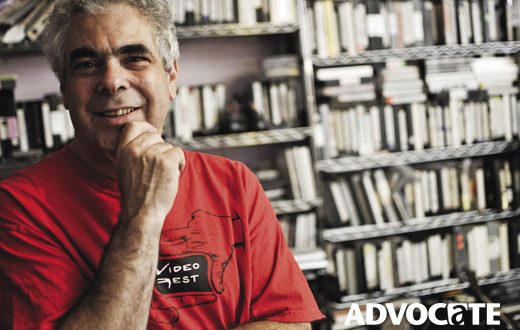
Bart Weiss started the Dallas Video Fest in 1987. The festival has always focused on new technology and off-beat programming.
The difference between a video festival and a film festival are fuzzy now, but in the ’80s, it was more distinct. Sundance Film Festival, for example, would not show video, only pieces shot on film. Now major feature films sometimes are shot entirely on video. But the festival always has striven to show what you might not see anywhere else.
“It was also on us to show African American titles, Latino titles, gay and lesbian titles, women’s titles,” Weiss says. “Now all those groups have their own film festivals, and we don’t have to cover those bases as much.”
The festival programmers always take advantage of cutting edge technology. The first year, for example, they decided to create the program book using desktop publishing.
“It was painful,” Weiss says. “It was horrible. But it paved the way for others to do it.”
The festival also was an early user of CD ROMs for its festival guide. Organizers developed an online form to register for the festival long before that became the norm. This year, they are offering the program via an iBook and eBook, with videos of programmers and directors talking about the videos.
“The New York Underground Film Festival, and some others, those are kind of similar to what we do now,” Weiss says. “It’s all in the way that we look at the medium, how technology impacts us and how we do our business.”
This year, the festival is offering programming on what Weiss considers “the largest canvas in Dallas,” the Omni Hotel. “When I saw [the hotel’s lights] I thought, ‘Wouldn’t it be nice if an artist were doing that?’ ” he says. The artists hadn’t been chosen as of press time, but the festival will take over the Omni lights on the Wednesday night before the festival, Sept. 26, and KXT will run a soundtrack to go with it.
Neighborhood resident Dee Mitchell, a contemporary art collector and curator, programs what’s called “The Program.” That’s a biannual presentation of video art that is part of the festival. This year’s Program includes two films from Robert Frank, a photographer and filmmaker known for his book The Americans. His avant-garde film “Pull My Daisy,” from 1959, is narrated by Jack Kerouac. His film “Conversations in Vermont,” from 1969, “is very hard to explain,” Mitchell says. But the evening will center on beat poetry and avant-garde filmmaking in the mid-century.
Mitchell also is programming a block of horror films, which he hopes to incorporate every year.
“We’ll have everything from splatter-punk animation to very sophisticated feature-quality films,” he says. “For people who like horror films, it will be fun.”
The festival has a history of showing the quirky and offbeat. TV commercials critiqued as art, reality shows from Australia, anything new and different. Plus, the work of local video artists.
“There are all kinds of people who do video art in Dallas,” Weiss says. “There are people who get shown around the world who make videos here.”
The festival has its success stories. The creators of “Jimmy Neutron: Boy Genius” got their start at the festival with their very popular animated series, “Nanna and Lil Puss Puss.”
“They’re basically, like, fart jokes with this old lady and a cat, and they’re really, really funny,” Weiss says.
Filmmaker David Lowery, who directed “Glorified High,” the first video from Sarah Jaffe’s new album, and recently announced he’s making a movie with Rooney Mara, showed his early films at the festival. One year, Lowery shot the festival’s intro reel.
Every film festival shows an intro before each film to say something about the festival, and usually it’s an afterthought, Weiss says. But the Dallas Video Festival has always taken the intro reel very seriously.
“I obsess about it,” he says.
One year, he offered the intro reel honors to a high school student, who was given the privilege of directing a high-dollar film crew for the first time.
Nothing is really an afterthought for Weiss and the video fest. They love the details, and bringing meaningful work to audiences is what inspires them.
“We all spend too much time in front of screens. We’re obsessed with digital images,” Weiss says. “The problem is we settle for mediocrity. Video has a way to make our lives better.”
That’s why the video fest tagline is “Better living through video,” he says.
“Video can be inspiring, and it is clearly the medium of our generation. My hope is you come and get excited about the possibilities,” Weiss says. “Then you go home Monday, and you sit down at your computer, and you don’t settle. You realize there is work out there that can make your life better.”