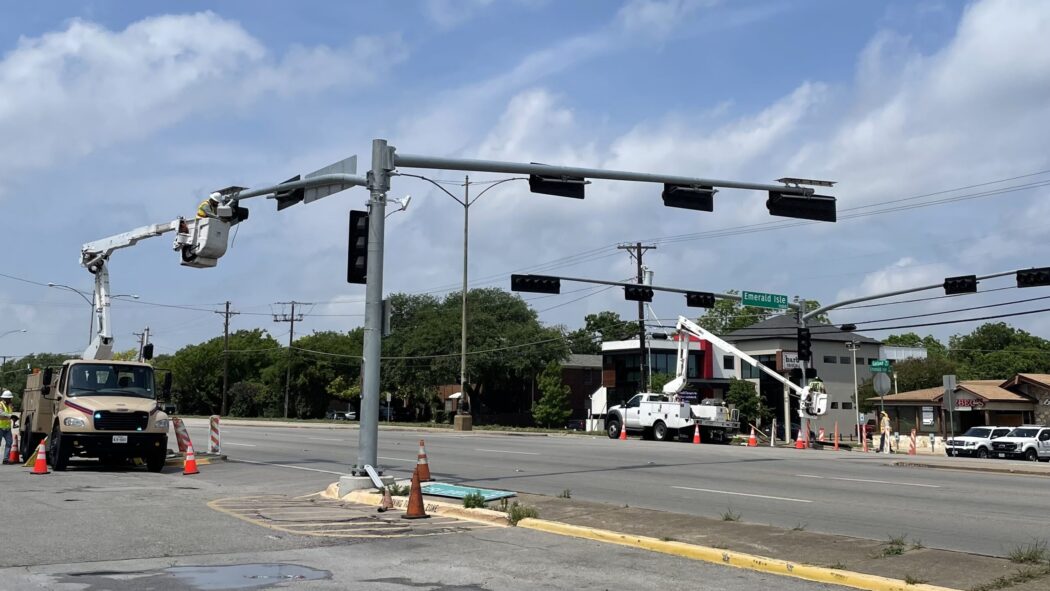
Traffic signal at Emerald Isle and Garland Road. Photo by Renee Umsted.
The updating of Garland Road Vision Plan is moving forward with a multimodal connectivity and economic opportunity study.
At last week’s meeting, Dallas City Council gave authorization of a one-year contract with the firm Gresham Smith for no more than $995,000.
“This study will evaluate existing and future land use conditions and integrate multimodal transportation system operations along the Garland Road corridor, from the Garland, Gaston and Grand intersection to Interstate Highway 635,” according to the City’s website. “These services will enhance connectivity and accessibility for pedestrians, bicyclists and public transit users, while guiding future development and infrastructure improvements to support safe, efficient and equitable mobility within the corridor.”
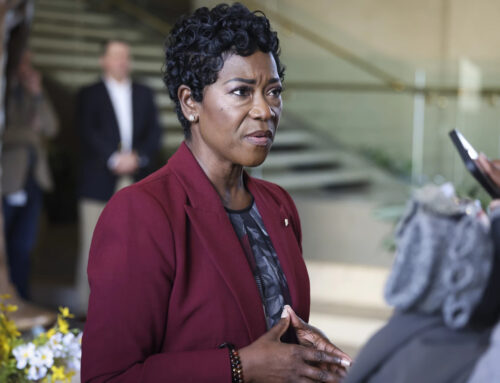
In a statement, District 9 Council member Paula Blackmon called this action item “a significant milestone for East Dallas.” Building on the 2010 Garland Road Vision study, Garland Road Next Generation Planning is expected to modernize land use, mobility and economic development.
“Our goal is to ensure the corridor’s long-term infrastructure meets both current and future needs – prioritizing walkability, bike-ability, housing, small businesses growth, and overall safety,” she said.
The need for Garland Road Next Generation Planning is based on multiple changes over the years, including updates to the City’s master plan and bike plan, plus commitment to Vision Zero, Blackmon said in her statement. She also mentioned new state legislation, like Senate Bill 840 that commands municipalities to “allow mixed-use residential use and development or multifamily residential use and development in a zoning classification that allows office, commercial, retail, warehouse or mixed-use use or development as an allowed use under the classification.”
An advisory board of community, neighborhood and business leaders (including some legacy members from the 2010 study) will guide the process. The board was meant to be inclusive while also being efficient. There will be chances for the public to give input as well.
“We’ve already got the advisory board. They’ve met a couple of times, and we’ve got some data that we’ve pulled from the City, but they’ll start meeting and start doing some visits, and they had some homework, read this, go look at that, tell us what you want, tell us what you don’t want,” Blackmon told the Lakewood/East Dallas Advocate. “So they’ll just start diving into the work of creating the update to the vision. And then community meetings, and we’ll see what goes from there.”
The funding for this project comes from an Economic Development Initiative Community Project Funding grant, under the U.S. Department of Housing and Urban Development.
“This HUD grant was secured in the (Fiscal Year) 24 federal budget by former Congressman Colin Allred, and I want to extend my sincere thanks to him and his office for this investment in our district,” Blackmon said in her statement. “Additionally, I want to thank staff from the Planning & Development, Transportation & Public Works, and Economic Development Departments for their diligence in moving this project forward.”
The updated plan will need to come back to the council for adoption, Blackmon said.