It’s fall, and the leaves are falling. Time to get out the rake and plastic garbage bags, right? Not so fast. It’s time to see your leaves differently, as a tool to nourish your lawn, help wildlife and reduce climate change. And before you panic at the thought of a wild-looking yard and stop reading this, understand that we’re simply suggesting your leaves don’t have to be left exactly where they fall. Neighbor Nancy Wilson can walk you through the reasons for and the process of leaving the leaves.
Nancy is a master gardener, master naturalist and frequent educational speaker in the community. She first learned the concept of “leave the leaves” from a webinar on invertebrates. But it was observing the critters in her own yard that convinced her. “Probably the real turning point was finding robins pulling worms out from under leaf litter and then finding a moth that looked just like a leaf fluttering in the litter.” She adds, “I could see for myself that leaf litter was life-giving. Insects and small animals need places to overwinter and hibernate.”
A note on terminology: “leaf litter” does not imply “trash.” It refers to leaves which have fallen on the ground.
To get on board with leaving the leaves, it helps to understand why those unsightly plastic bags you see piled at the curb are a bad idea. About 8 million tons of leaves end up in the landfill every year. The leaves in the bags break down anaerobically — without oxygen — and produce methane, a potent greenhouse gas that contributes to climate change and global warming.
Keep in mind, it’s not just leaves you’re scooping up and depositing in those bags: you’re also trapping caterpillars, firefly larva and other life, essentially ending the next generation of butterflies, fireflies, moths, beetles and other critters.
Nancy knows it’s a challenge getting folks to feel warm and fuzzy toward bugs. “Most people react negatively to insects,” she says, “but they need to realize that most insects and spiders are beneficial and do no harm to humans or to plants. Insects are vital components of the cycle of life. Without them, we would have no flowering plants and very little food.”
Your leaf litter provides a habitat for overwintering insects, including many pollinators, and by leaving the leaves, you’re investing in future pollinators. Bees, moths and butterflies — whether as eggs, pupae or adults — use the leaf layer for warmth and protection during the cold winter months.
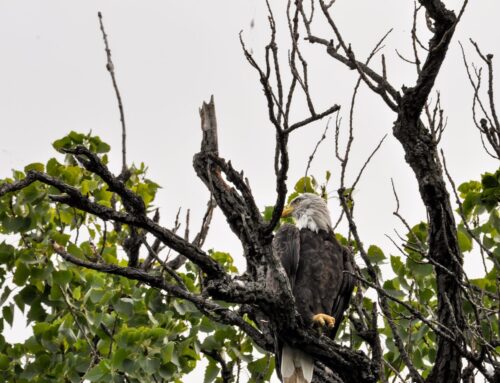
Birds, too, benefit from the leaves that have fallen on your yard. If you enjoy watching the birds in your space, know that a layer of leaves provides them with food and shelter. Bonus: more birds will visit your yard because of your hospitality.
“During winter months,” Nancy explains, “many seasonal birds come to Texas. Juncos, towhees, warblers, robins and sparrows all search for food in the leaf litter. It’s really fun to watch them. Towhees are super cute — they will jump up and scoot the litter behind them with their feet. Other birds nose around with their beaks and search with their feet as well. It’s fun to see when they find something.”
There are many kinds of bird food hiding in leaf litter: seeds, nuts, berries, worms, ants, spiders, snails, beetles, toads and lizards, just to name a few. Birds are instinctively attracted to this protein-packed buffet.
And just like their invertebrate colleagues, birds use leaf litter as a place to hide from predators and snuggle into to stay warm.
“Everywhere you look, there are studies showing the dramatic decrease in the number of birds and insects surviving in our world,” Nancy says. “Habitat loss and pesticide use are two of the biggest reasons we are losing our birds. Every teeny bit of healthy habitat we can offer in our neighborhoods really makes a difference.”
Leaves support wildlife, yes, but they are also beneficial for your plants. As leaf litter breaks down into a natural mulch, it releases essential nutrients back into the soil. If you have extra leaves after leaving a thin layer for wildlife, use them strategically as you prepare for our inevitable harsh winters and dreaded freezes. “Leaves can be tucked in under shrubs or in out-of-the-way spaces,” says Nancy.
Applying a layer of leaves around the base of trees helps protect roots from freeze damage. Leaves left on flower beds can insulate perennials, keep soil from drying out and break down to return nutrients to the soil. Nancy also advises, “On bare soil, a few inches of leaves will suppress weeds from sprouting.” Why buy mulch when your leaves do the job for free?
Another option is running a mower over leaves. “This chops the leaves into small pieces, which break down faster and naturally fertilize your lawn without smothering it. You could also compost the leaves, which creates a fantastic, nutrient-rich material that you can later use in your garden. While mulched or composted leaves won’t benefit wildlife as much, you’re at least keeping the leaves out of the landfill.”
Think about it: when did you ever see a forest that was raked? And yet it thrives. The more we mimic nature and leave the leaves, the better we support the ecosystem.