Photography by Kathy Tran
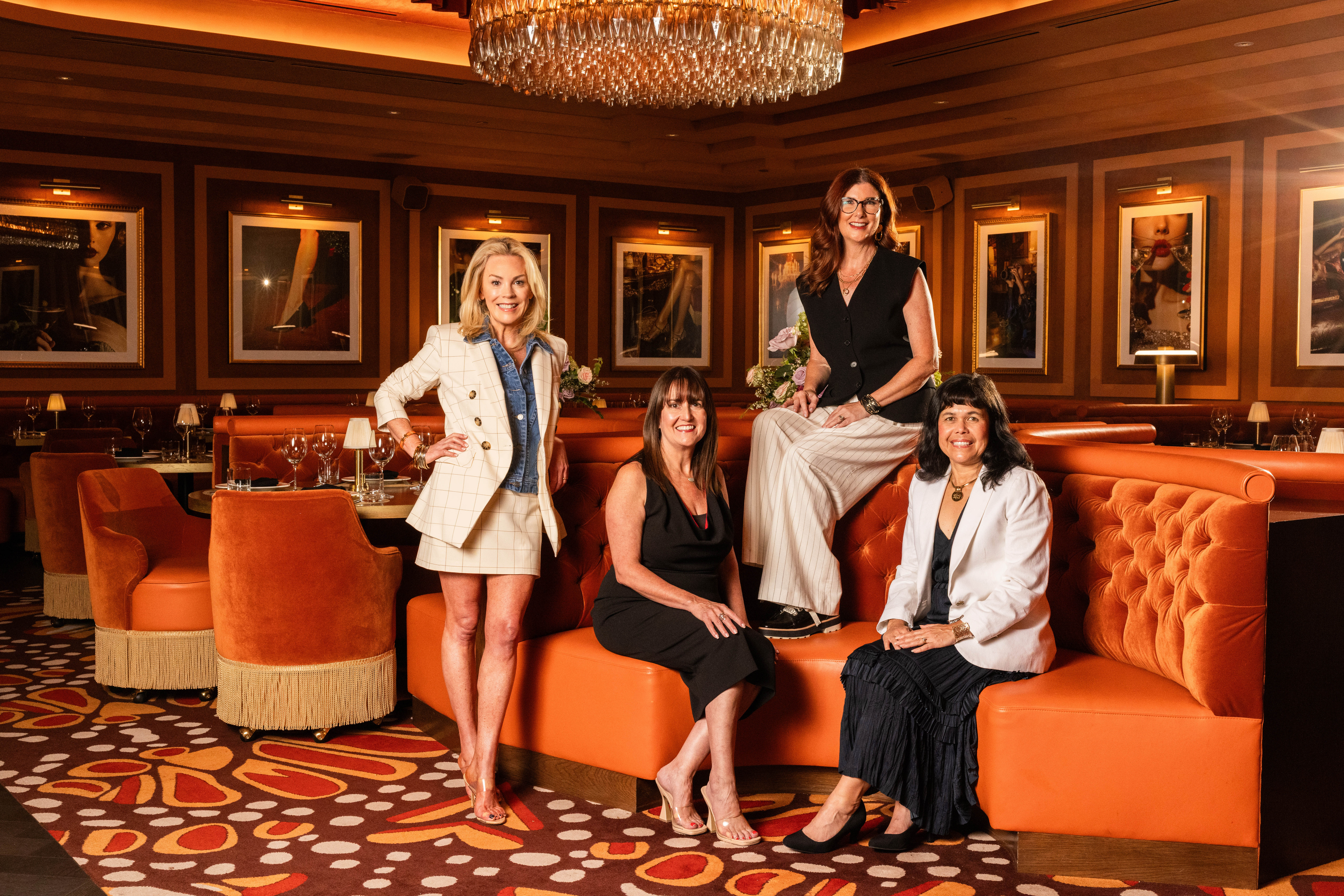
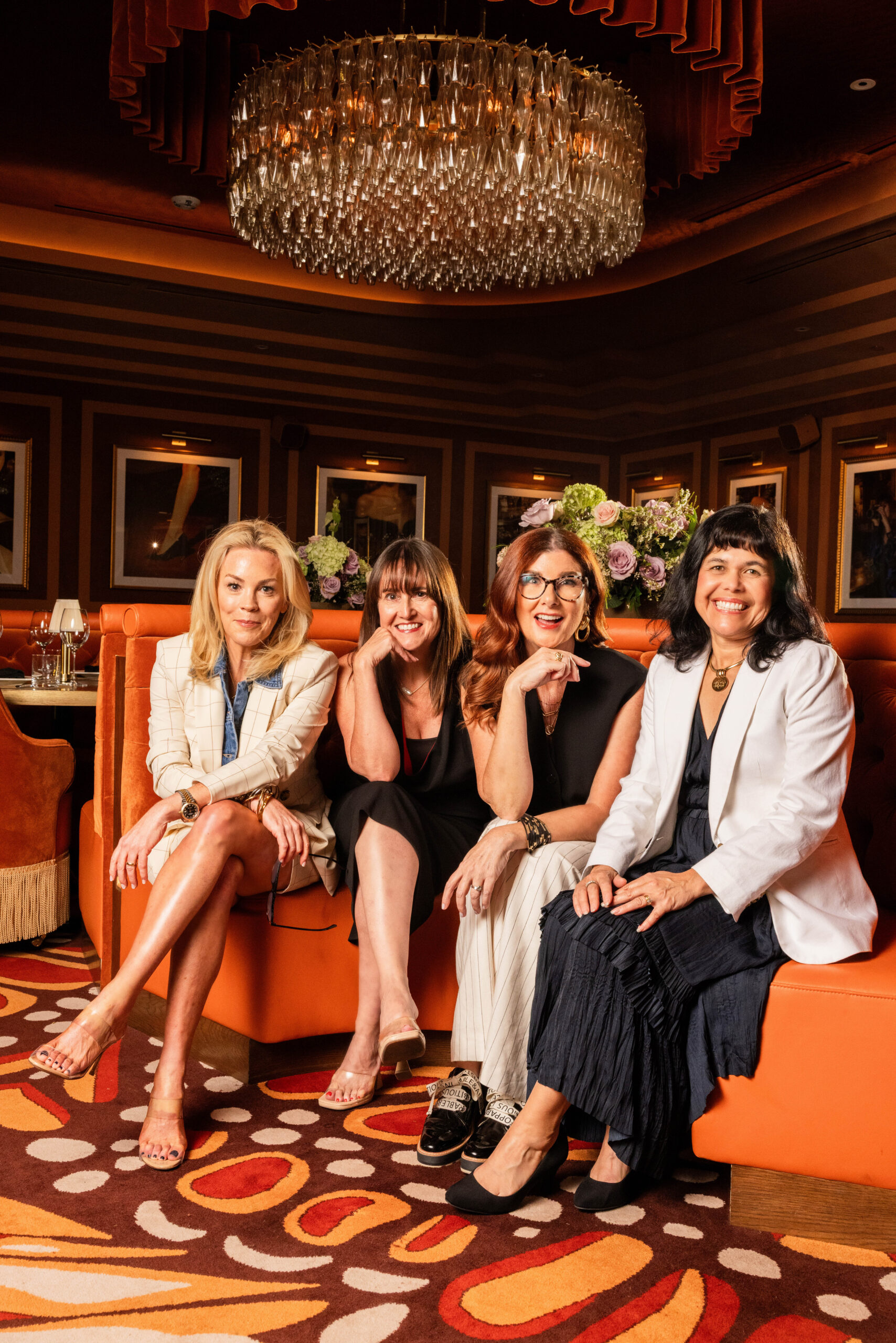
Lindsey Miller, Amy Power, Cynthia Smoot, Juliette Coulter and Jennifer Pascal (not pictured here) are leaders in Dallas public relations.
“Advertising is saying you’re good. PR is getting someone else to say you’re good.” — Jean-Louis Gassée, former Apple executive
There are a lot of public relations firms in Dallas, and a significant portion seem to be run by women. This might fly under the radar if you’re not in a business/organization that has worked with a public relations agency or an editor sifting through pitches.
The five Dallas public relations moguls interviewed for this article all had unique ways of getting where they are today.
The social media OG
Cynthia Smoot grew up near the Texas-Oklahoma border in Denison and really had no idea what she wanted to do for her career. She received her degree in clothing and textiles at the University of North Texas but found success in advertising sales at the Dallas Observer.
“Really what I realized was all of those years of me being able to talk my dad out of money, I realized I could talk anyone out of their money,” Smoot says.
Smoot worked with the Observer for 12 years and helped D Magazine launch D CEO. She made the jump to working with her husband’s agency, Gangway, in 2008.
It was around this time that Smoot started seeing what some of her peers didn’t — that blogs and social media were the future of the media business.
“I had developed this interest in social media and kept saying to anyone who would listen, ‘I really feel like this is where marketing is going. Why do we not have a blog? We should be doing more online.’ And people are like, ‘Nobody’s ever gonna replace print,’” Smoot says. “It was, at that time, hard to fathom.”
At Gangway, Smoot was pitching ideas to clients about using social media to market their business. Eventually, that path took Gangway from a more traditional agency to one offering full-service marketing and public relations services.
“I kind of had this light bulb moment, and I was like, you know what? It’s so much better for other people to be saying how great you are than for you to say it about yourself all the time, so if we could get more places to talk about how great your happy hour is or how you’re an amazing place for brunch, then that’s content we can use on social media that gives you credibility,” she says.
The difference maker
Born in Thailand and raised in Northern California, Juliette Coulter graduated from college in the early 1990s, had a job with a state lawmaker and then moved to Washington, D.C.
“I thought I was going to go work on Capitol Hill, like all the young ones, realized the pay was awful, and I pretty much talked my way into a PR job at FleishmanHillard,” she says.
Coulter didn’t know much about public relations but was confident that she could learn — and she did. She worked for FleishmanHillard again when that company opened a Dallas outpost, then moved on to Rita Cox’s company. By 1998, she started her business, The Coulter Group. Her husband joined the company a couple of years later. Coulter originally wanted to do “high tech PR” and worked for some startup firms, but she became more interested in partnering with clients who want to make the world better.
“I realized that the type of PR I liked was working with people and amplifying their mission,” she says. “I like to work with clients, with organizations, with nonprofits that make a difference, that there is a tangible difference in the community because of what they do.” She points out clients like Texas Women’s Foundation and Texas Woman’s University as examples.
For better or worse, Coulter’s work usually never slows down, and when it has, it hasn’t been for a good reason. She recalled having to cancel a work trip to New York after the 9/11 terrorist attacks. Then, of course there was the COVID-19 pandemic when the Dallas Arboretum and Botanical Garden, a big part of her business at the time, paused her services.
“I realized, OK, I need to make sure I have some other clients, and not just one where it’s just my sole business because that is not good,” Coulter says. “They definitely then came back around June 1 when they opened their doors, but for a while, I thought, OK, I’m twiddling my thumbs. I’m not good at that.”
The female empowerment mentor
Atlanta-native Amy Power came to Dallas to take an internship at an environmental public relations firm, and she picked up on the entrepreneurial nature of our city that, through her eyes, has been supportive to her as a woman.
After years of working for various firms, Power started The Power Group in 1999 and has a specific goal, aside from working with clients.
“My mission here is creating business women,” Power says. “I love that I have an all-female team. I just love watching them thrive. I love watching younger people sitting down with a CEO with confidence and being able to hold their own and advise and consult and let a CMO or a CEO know that, ‘Yeah, I’ve got you, I know what I’m doing, and I’m going to help you fix whatever problem you’re having.’”
The Power Group started after Power had the displeasure of working for a toxic boss. She was pregnant at the time and left her job after realizing that the environment was not sustainable or healthy enough to stay.
Power received a tip from a colleague about a new car dealership, what would become Boardwalk Auto Group in Plano. She set up a meeting with the dealership’s leaders on the phone while she was in the hospital about to give birth. Her child and company were born that day.
When asked what her biggest challenge has been, Power points to the future of the media business — artificial intelligence. The Power Group team has embraced A.I. and is working on using it in a “smart and strategic way.”
“I know every white collar worker in America is … They may not admit it, but they’re scared. They feel threatened,” she says. “I’m curious and excited and measured. I think the biggest challenge is figuring out, what do we evolve into, what do we become? Fundamentally, the purpose of this company is not going to change. We’re still going to be creating business women, but maybe these business women are going to be having different types of conversations or working in different areas.”
The strategic listener
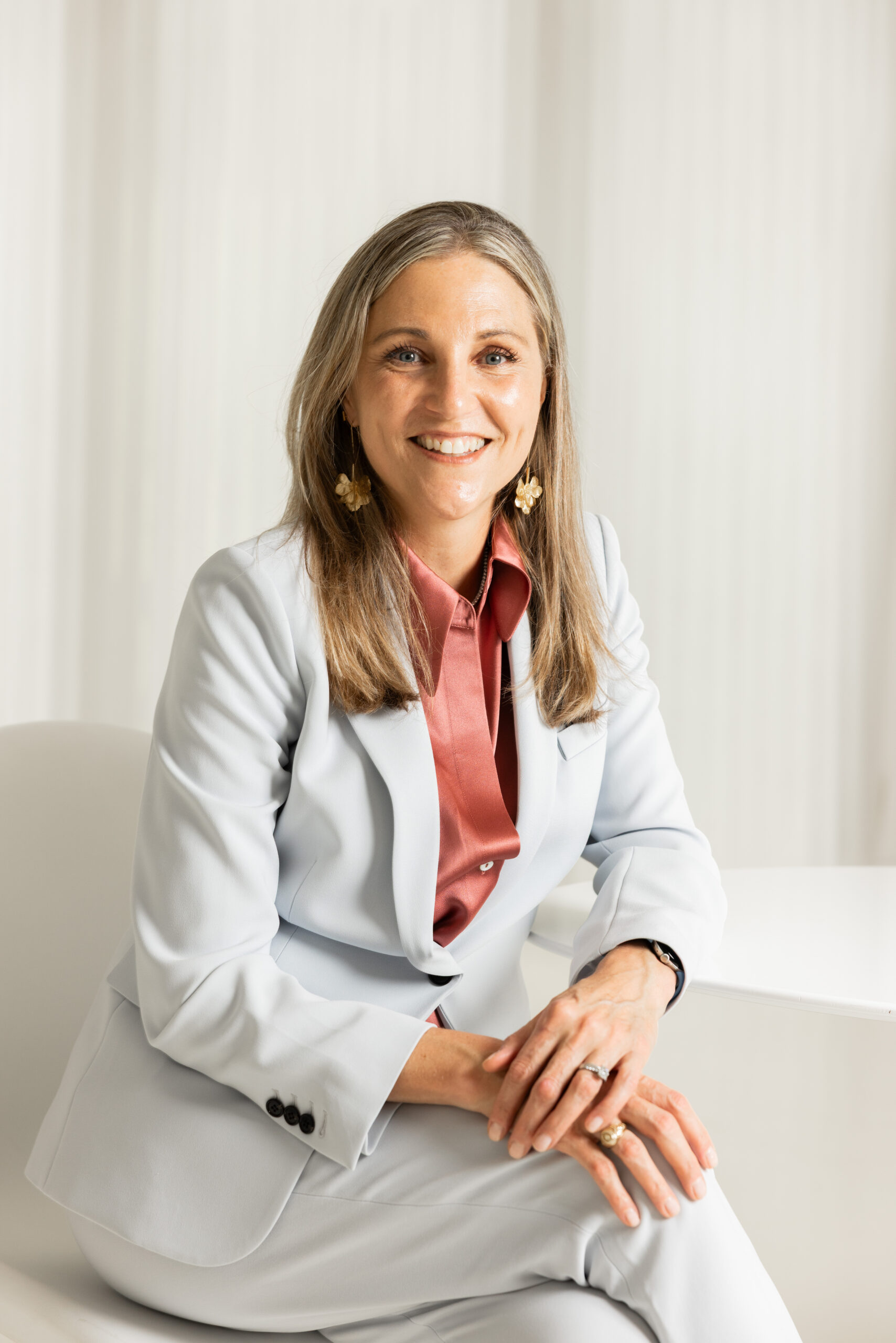
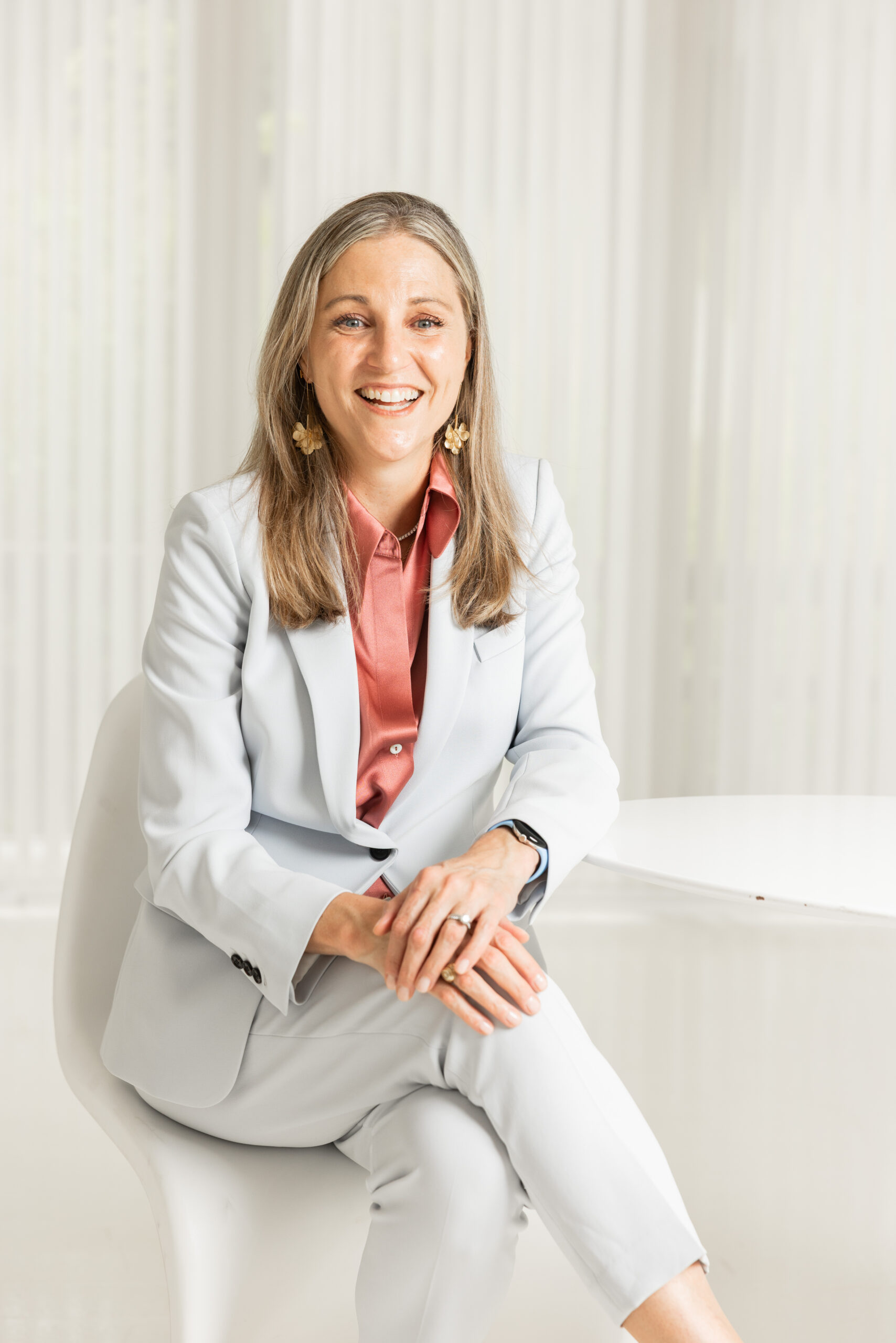
Dallas native Jennifer Pascal, co-owner and chief operating officer of Allyn Media, studied political science at Texas A&M University, had a job at an advertising agency, attended the University of Texas at Dallas for a master’s degree in public affairs, worked as a teaching and research assistant and has conducted research about tobacco products.
But one of her most defining experiences was working in Methodist Health System’s billing and collections department in Dallas and witnessing some folks’ meltdowns about paying hospital bills. Though it could be unpleasant to hear a caller screaming curse words at her, that job taught Pascal to lend a sympathetic ear and then look for a solution.
“That’s really something that we all need to do more of, obviously, is just listening to other people,” she says. “The root of most problems is a communication challenge, so if we can listen and process and then act, it’s always better.”
When she was looking for a job around 1999, she got connected with Mari Woodlief, the current co-owner and CEO of Allyn.
They first met at the now-closed Tex-Mex restaurant Primo’s on McKinney Avenue, and then Woodlief introduced her to Rob Allyn of the then-named firm Allyn and Company, who hired Pascal.
Her first assignment at Allyn was writing for former Dallas Mayor Ron Kirk’s re-election campaign. Allyn also worked for former Mayor Mike Rawlings.
Woodlief and Pascal eventually bought Allyn in 2009.
Pascal did survey research for the Friends of Dallas Love Field about repealing the now dissolved-Wright Amendment that prevented the airport from providing flights to more than a handful of states. Recently, Allyn also worked with the City of Dallas on the 2024 bond election.
“While politics is probably in any given year 1% of our business, it’s still a way to exercise a muscle that’s about all the same things that we would use for Walmart or (the YMCA) or the Resource Center or any corporate client,” Pascal says. “Are we listening to people? Because that’s what the research is about. Are we using the right tools? How do we reach them, and are we giving them information, educating them about something so that we can motivate them to take some step?”
The culinary queen
Lindsey Miller graduated from Texas Christian University with a double major in French and design, fashion merchandising, textiles by accident because she took so many French courses.
The Dallas native worked for Henry S. Miller in the ‘90’s during college as an intern and after she graduated. Then, she started her own firm in 1999 when she realized that would give her more opportunities and fewer limitations.
“You can only go so far in a smaller company like that, and I was already the director of marketing,” Miller says. “And I really needed to do something that made more money and that gave me more flexible hours because I wanted to have more kids, but I also wanted to be able to go to their sports games. That was important to me.”
When she launched her own company, Miller’s clients included some retail stores as well as a home building company and a catering business. Then her husband,who left the film industry for restaurant real estate, got her into public relations for food and drink establishments in 2008. It all started with Bolsa, the Oak Cliff farm-to-table eatery that brought something special to Dallas, Miller says.
“I always joked that I never wanted to be in restaurant PR,” Miller says. “There were some great old-time OGpublicists that were in restaurant PR. They’re not around anymore, but I could never compete with them. I thought, I’ll stay in my own lane. And they were dear friends of mine, and back then, I was the youngest person in the group that they welcomed me in.”
Miller was nervous to meet with the Bolsa owners because she didn’t know if she could do the job justice.
“But I went and sat with them and learned so much about the project and about the DNA of the brand that I knew that this was going to be a turning point for Dallas dining, and I knew I wanted to be a part of it,” she says. “I fought for that business, and I landed it.”
Nowadays, her business centers around restaurants, what she calls the “best groups in town.” Miller works with clients that run the gamut from major corporate operators coming to Dallas from different cities to one-off chef-driven concepts.
“The passion behind what I’m doing for every single client is so unique and so different,” Miller says. “It’s not just a job, and it’s not just a client. It’s truly something I believe in and is in my DNA. It’s in everything I do.”