
This article was submitted to The Advocate by a reader in response to our June issue story regarding the crash on Abrams Road.
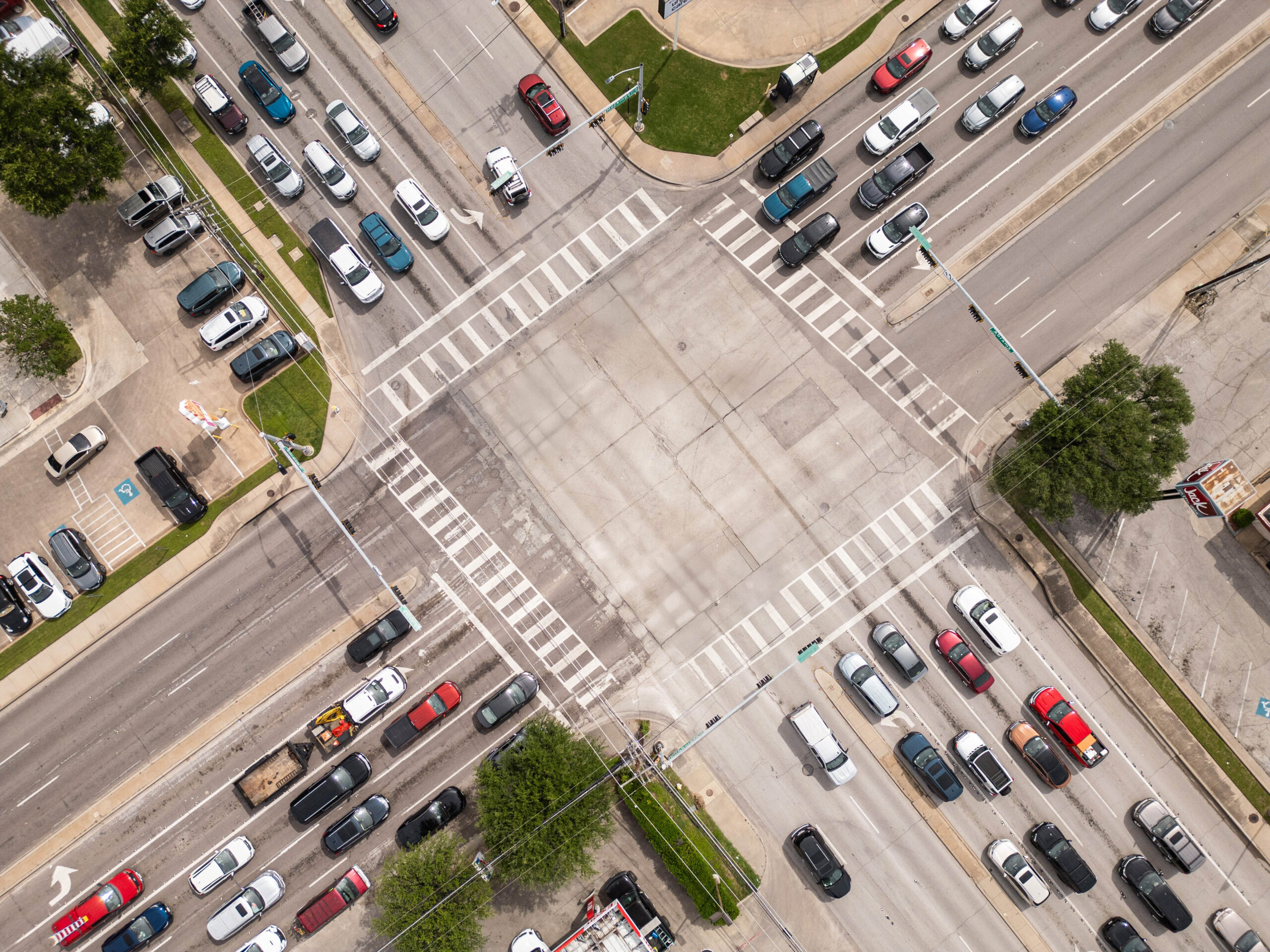
Photography by Kathy Tran
I am beginning with the conclusion because if you are okay with what the City is about to do, then you do not need to read any further. Conclusion: The City intends to turn Abrams Road from Mockingbird Lane south to Richmond Ave. into a road similar to Mockingbird Lane from Hillcrest to the Dallas North Tollway. If you enjoy driving that stretch of Mockingbird, you’ll love the new Abrams Road.
So, let’s look at how we got. First, Abrams and Skillman have been pretty much the same since I arrived in Dallas 50 years ago. The size of homes in Lakewood and surrounding areas may have increased, but there has not been a significant increase the number of people occupying those homes, so why is there now a traffic problem? The reasons are: (1) the City approved zoning changes and granted building permits to increase the number of apartments and commercial development in the surrounding area (i.e., around the 3G interchange) without adequately addressing the traffic issues; (2) the City has funneled more traffic onto Abrams by installing speed bumps and stop signs along Williamson and West Shore (coming out of Hollywood Heights) because people purchased homes along these busy streets and then complained about the amount of traffic; (3) the City took away one of the southbound lanes of Abrams beginning at Richmond in order to install a bicycle lane that no one uses; (4) the City has timed the lights along Abrams to slow down traffic which only frustrates drivers and leads them to speed in an attempt to make the lights; (5) the City no longer enforces traffic laws (Is anyone in Dallas afraid of getting a speeding ticket anymore?); (6) never-ending road construction slows traffic, which frustrates drivers; and (7) the City has an unrealistic expectation that bike lanes will ever be used in Dallas.
So, the City has caused the problem and has now thrown up its hands and cried, “What do we do?” Its answer, pay a million dollars for a traffic study. But the City already knows what it wants to do, it just needs a study by professional engineers to placate the masses. If anyone objects, City leaders can just point to the study and say, “This is what the experts advise.” (If the City doesn’t have its own personnel with expertise to solve these types of problems, then let’s fire them.) In order for the City to make sure it gets what it wants, the City sets the parameters of the study to achieve the predetermined results. First, the study needs to stop at Richmond Ave., otherwise, the engineers might determine that the City’s new bike lane is a cause of the problem and recommend its removal. Second, do not study the environmental impact of how having hundreds of cars idling next to empty bike lanes while waiting through two and three stoplights. Third, don’t have the engineers consider improving traffic flow on other streets by removing stop signs and speed bumps will shift traffic off of Abrams. Finally, the engineers absolutely must not consider improving and widening Williamson because the Lakewood residents will become apoplectic. (Historical Note: The City originally planned to make Williamson a four-lane road from Mockingbird to I-30, but gave up the plan due to the outcry from Lakewood residents.)
So, what do we do now? How the heck should I know? The City could just quit making repairs and let the pot holes slow down traffic. Not fun, but it would save a lot of money. And speaking of saving money, the City’s proposed improvements will cost several million dollars. Let’s guess $5 million, but we know it will be a lot more. If we took that money, plus the $1 million the City spent on its traffic study, we’d have $6 million. Now, let’s assume it would cost the City $500,000/year to hire one or two police officers to patrol Abrams and Skillman whose only job is to patrol these two streets. Surely, 12 years of constant patrolling would not only substantially
reduce the number of accidents but would also reduce crime in the area.
One final question, will the City’s “improvements” improve your quality of life? Since I moved into Lakewood in 1985, the amount of time it takes to drive from my home to my office in northwest Dallas has almost doubled, and it isn’t because of traffic on Central Expressway or LBJ, which have been greatly improved. The problem is getting out of Lakewood. The City’s improvements will only grind traffic to a halt and make the neighborhood a less desirable place to live.